Quick answer: Before you buy a used hyperbaric chamber, check three things first: whether it still holds pressure, the state of its acrylic windows, and its paper trail. Then look at seals, valves, controls, and oxygen delivery. Ask for the ASME PVHO-1 data report, window records, service logs, and FDA 510(k) number. Finally, get a written warranty, because “as-is” leaves every risk with you.
A used hyperbaric chamber can save a clinic a lot of money. But it can also hide problems you won’t see in photos. After all, a chamber is a pressure vessel that holds people, so its hidden flaws matter more than a scuffed panel.
At PCCI Hyperbaric Systems, we inspect, repair, and recertify chambers from many makers, including models whose makers no longer support them. So this guide walks you through what we check first, and why. It also covers the papers to ask for, the warranty terms to watch, and the red flags that should end a deal.
Is a Used Hyperbaric Chamber Worth Buying?
A used hyperbaric chamber can be worth buying, but only if it is a mild soft-shell wellness unit with a verified service history, and you avoid uninspected clinical hard-shell vessels.
The Benefits of a Used Hyperbaric Chamber for Sale
First of all, the biggest draw is price. New clinical monoplace chambers often run $80,000 to $250,000, while a pre-owned unit usually costs less. So you can start treating patients sooner. Many used models, too, are proven designs with known service records. And since hard-shell chambers can last for decades, a well-kept one still has plenty of life left.
The Risks You Take On
Still, a used chamber comes with history. Windows age, seals wear out, and records go missing. Some models are also “orphans,” which means their first maker no longer sells parts. So a low price can turn costly if the chamber needs major work or can’t pass inspection at all.
Who Should Consider a Used Chamber?
A used hyperbaric chamber makes the most sense for clinics on a tight budget, programs with testing demand, or sites adding a second unit. On the other hand, it makes less sense if you need custom features or if the seller can’t show where the chamber has been.
What to Inspect First on a Used Hyperbaric Chamber
Start with the parts that can’t be fixed cheaply, because if any of these fail, you may want to walk away.
1. Pressure Integrity and Leaks
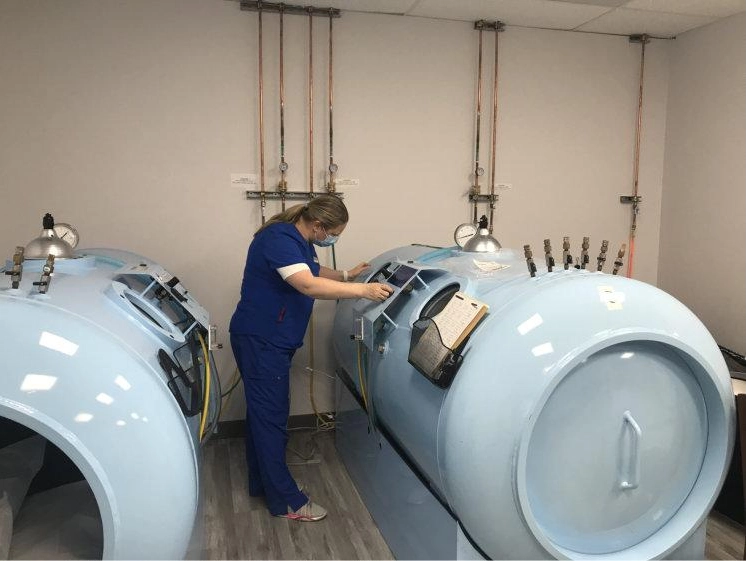
First, the chamber should reach its rated pressure and hold it. So a skilled technician runs a pressure hold test, with the supply shut off, and watches for any drop. Then they check each seam, fitting, and valve for leaks. Small fitting leaks, for instance, are often easy to fix. A crack in the shell or a weld, however, is a serious problem.
2. Acrylic Windows (Viewports)
Next, look closely at every window. Crazing, which looks like fine spider-web cracks, is a warning sign. So are deep scratches, chips, cloudiness, and yellowing. Each window also has its own records and a set service life, and ASME PVHO-2 guides when it’s still fit for use. So ask when each window was made or last replaced.
3. Door, Seals and Gaskets
Next, the door should close and lock smoothly. Then check the seals and gaskets for cracks, flat spots, or stiffness. Worn seals are common and cheap to replace, but a bent door or a damaged sealing surface costs far more.
4. Valves, Gauges and Pressure Relief
After that, test the relief valves, since they must open at the right point and reseat cleanly. Gauges should also read true, so ask when they were last calibrated. And check that every valve moves freely and doesn’t stick.
5. Controls and Oxygen Delivery
Then run the controls through a full cycle. Meanwhile, watch how smoothly the chamber raises and lowers pressure. Also check how oxygen reaches the patient, whether it fills the chamber or flows through a hood or mask. Finally, find out what oxygen supply the chamber needs at your site.
6. Communication, Monitoring and Safety Systems
Lastly, test the intercom, oxygen monitors, and alarms. For multiplace chambers, check the fire suppression system too, since NFPA 99 requires it. Grounding and emergency pressure release must work as well.
What Documents Should Come With a Used Hyperbaric Chamber?
Papers matter as much as hardware. In fact, a chamber with no records may not pass a fire marshal review or an accreditation survey. So ask for these:
Document | Why it matters |
ASME PVHO-1 Form GR-1 and Section VIII data report | Proves how the vessel was built and tested |
Window forms VP-1 to VP-5 | Shows each window’s design, build, and test history |
Nameplate photo | Ties the chamber to its papers |
FDA 510(k) number | Confirms the model is cleared for medical use |
Service and repair logs | Shows upkeep, repairs, and parts changed |
Hours of use and pressure cycles | Hints at wear on parts and windows |
Last inspection and test reports | Shows the chamber’s current state |
Operating and maintenance manuals | Needed for safe use and training |
If records are missing, a recertification can sometimes rebuild the paper trail. However, that means new inspections and tests, so budget for i
Hard-Shell vs. Soft-Shell: What “Used” Means for Each
Most used chamber listings, however, mix two very different products. Hard-shell chambers are rigid steel or acrylic vessels that reach clinical pressures. Soft-shell chambers, by contrast, are fabric units that run near 1.3 ATA on air, and their zippers, fabric, and seams wear out fast. So for clinical use, this guide focuses on hard-shell chambers, which can be inspected and recertified for years.
Parts, Support and Orphan Chambers
Before you buy, ask who will service the chamber. After all, some makers have closed or dropped older models. Those orphan chambers can still run well, though, but only if someone can supply parts and repairs. That’s why we service chambers from many makers, orphans included. We can also use parts that match the original, or engineer new ones.
Used Hyperbaric Chamber Warranty: As-Is vs. Certified Pre-Owned
What “As-Is” Really Means
First, an as-is sale usually means no warranty at all. So if a window fails or a valve leaks next month, the cost is yours. Treat an as-is price as only the starting point.
What to Look for in a Used Hyperbaric Chamber Warranty
A good used hyperbaric chamber warranty is in writing. So it names what’s covered, for how long, and who does the work. Also check what’s left out, since wear parts like seals are often excluded. For example, our certified pre-owned monoplaces come with a 6-month warranty, with an optional 12-month plan.
Want a used chamber you can trust?
Our certified pre-owned chambers pass a 50-point inspection, get recertified, and come with a written warranty. So talk to our team about pre-owned options, or have us inspect a chamber you’re eyeing.
Hidden Costs Beyond the Price Tag
The asking price is rarely the full cost. So plan for these as well:
- Delivery and rigging: Chambers are heavy, and some need a crane or a wide doorway.
- Site work: Your room needs the right floor, power, airflow, and fire safety.
- Oxygen supply: If no oxygen setup comes with the chamber, you’ll need one.
- Repairs and parts: Windows, seals, and gauges may need replacing.
- Recommissioning: After a move, the chamber needs new tests before patient use.
- Training: Your staff must learn this exact model, too.
Red Flags When Buying a Used Hyperbaric Chamber
Walk away, or at least ask hard questions, if you see any of these:
- The seller has no PVHO-1 data report or window records.
- The nameplate is missing, worn off, or doesn’t match the papers.
- Windows show crazing, cracks, or deep scratches.
- It won’t hold pressure during a test.
- No one can share its service history or hours of use.
- It’s an orphan model, and no one can supply parts.
- The seller won’t allow an outside inspection.
Used Hyperbaric Chamber Inspection Checklist
Use this checklist when you look at any used hyperbaric chamber for sale:
- Holds rated pressure with the supply shut off
- No leaks at seams, fittings, or valves
- Windows clear, with no crazing, cracks, or deep scratches
- Window make and service dates on record
- Door closes and locks smoothly; seals in good shape
- Relief valves tested; gauges calibrated
- Controls run a full pressure cycle smoothly
- Oxygen delivery and supply needs confirmed
- Intercom, monitors and alarms working
- Fire suppression tested, if multiplace
- PVHO-1 data report, window forms and nameplate match
- FDA 510(k) number confirmed for medical use
- Service logs, hours, and cycles reviewed
- Parts and service support confirmed
- Written warranty in hand
How PCCI Certifies Pre-Owned Hyperbaric Chambers
We’ve delivered hundreds of certified pre-owned chambers around the world, and each one goes through a 50-point safety and electro-mechanical inspection. Then we repair or replace worn parts and run recertification tests to ASME PVHO-1 and NFPA 99. Finally, you get a full set of compliance papers, ready for accreditation surveys.
Before buying a used hyperbaric chamber, it’s important to check its condition and service history. PCCI’s chamber refurbishment and recertification services help identify safety concerns, worn components, and repairs that may be needed before the chamber returns to service. If the equipment needs extensive repairs, a certified pre-owned monoplace chamber may be a better long-term investment.
Frequently Asked Questions
Can you buy a used hyperbaric oxygen chamber?
Yes, since clinics often buy used hard-shell chambers to save money. Still, the chamber should pass a full inspection, come with its build and window records, and carry a written warranty. A certified pre-owned chamber, by contrast, has already been inspected, repaired, and retested, which lowers your risk.
Is a used hyperbaric chamber worth it?
It can be, as long as it passes inspection and comes with records. After all, a used chamber costs less than a new one and can last for years. However, missing papers, worn windows, or an orphan model can wipe out the savings. So compare the total cost, not just the price.
What warranty should a used hyperbaric chamber have?
Look for a written warranty that names what’s covered, for how long, and who does the repairs. As-is sales, by contrast, usually carry no warranty at all. Our certified pre-owned monoplaces, for example, come with a 6-month warranty, with a 12-month option. Also check which wear parts are left out.
How do I know if a used chamber’s windows are safe?
Look for crazing, cracks, deep scratches, cloudiness, or yellowing. Then ask for each window’s records and its make or replacement date. ASME PVHO-2 guides when acrylic windows are still fit for service. If in doubt, have a skilled hyperbaric engineer check them before you buy.
Does a used hyperbaric chamber need to be recertified?
Often, yes, mainly after a move, major repairs, or a change of owner. That’s because recertification checks the chamber against code and rebuilds missing records. It also gives fire marshals and surveyors the papers they expect. So budget for it when you buy.
Do you need a license to operate a hyperbaric chamber?
No, there’s no single federal license for operators. However, many sites require trained, certified staff, such as Certified Hyperbaric Technologists (CHT). Medical use also needs a doctor’s oversight, and NFPA 99 requires each site to name a safety director. So check your state’s rules too.