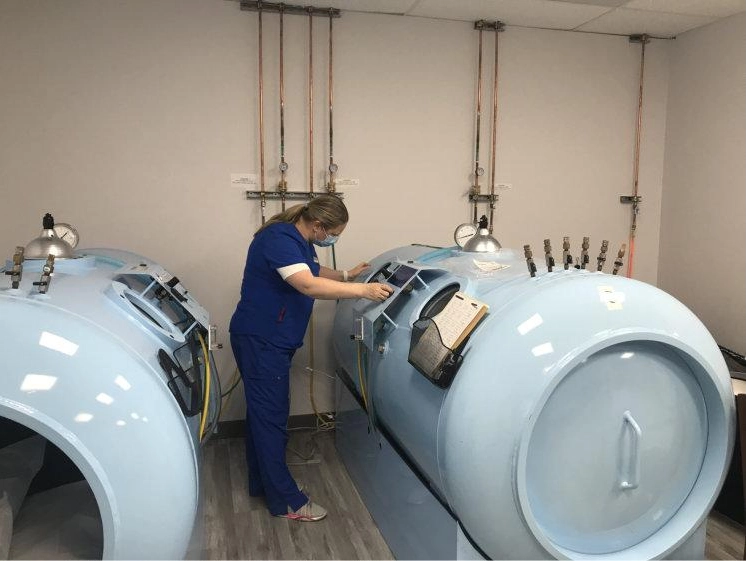

Quick answer: No one chamber is the best hyperbaric chamber for every clinic. Instead, the best one for you fits your care plans, patient load, room, and budget. For clinical HBOT, that’s most often a hard-shell monoplace or multiplace chamber. It should also have FDA 510(k) clearance, be built to ASME PVHO-1, be installed to NFPA 99, and come with real service support.
Look up the best hyperbaric chamber online, and you’ll find lists that rank models like cars. But a clinic isn’t buying a gadget. Instead, you’re buying a medical pressure vessel, and it has to suit your patients, staff, room, and codes for decades.
At PCCI Hyperbaric Systems, we design, build, install and service hard-shell chambers, so we’ve seen what works. That’s why this guide asks the same questions our engineers ask clinics before any quote. You’ll also find a full buying checklist and a decision table near the end, ready to share with your team.
How to Choose the Best Hyperbaric Chamber for Your Clinic
Start With Your Clinic’s Treatment Goals and Patient Needs
Begin with what you’ll treat. For example, a wound care clinic treating FDA-cleared conditions needs a clinical chamber, a doctor in charge, and good records. A hospital that takes emergencies, on the other hand, needs room for staff inside the chamber. So write down your main conditions, your usual patients, and any special needs, like wheelchairs or stretchers.
Identify Your Required Pressure Rating, Capacity, and Budget
Next, turn those goals into specs. Your doctor’s care plans set the pressure range, while your patient load sets the size. Meanwhile, your budget decides between new, custom, and certified pre-owned. Once you have those three facts, your list of the best hyperbaric chamber options gets short fast.
Monoplace vs. Multiplace Hyperbaric Chambers: Which Is Better?
Monoplace Chambers for Single-Patient Treatment
A monoplace chamber treats one patient at a time. Because of that, it’s a good fit for most outpatient clinics with stable patients and set schedules. Our seated monoplace hyperbaric chamber, the Althea 4200, is built for this kind of clinic. It runs on air while the patient breathes oxygen through a hood or mask. It also holds patients up to 500 lb and fits through a 48-inch door.
Multiplace Chambers for Higher Patient Capacity
A multiplace chamber, by contrast, treats a group at once, with a trained staff member inside. So it’s often the best hyperbaric chamber for hospitals, critical care, and busy programs. Our multiplace hyperbaric chambers hold 2 to 30 people. They also come with one to three locks, and oxygen flows through built-in breathing systems (BIBS).
Comparing Patient Access, Oxygen Delivery, Staffing, and Space
Factor | Monoplace | Multiplace |
Patients per run | One | 2 to 30 (PCCI range) |
Oxygen delivery | Chamber fill, or hood or mask | BIBS hoods or masks |
Staff inside | No | Yes |
Critical care | Limited | Vents, suction, and monitors can be added |
Room size | A standard room | A large room, often built for it |
Staffing | One operator per chamber | Operators plus a staff member inside |
Upfront cost | Lower | Higher |
Still, here’s a tip most guides skip: count chamber runs, not just seats. Say a 90-minute session plus clean-up takes about two hours. Then an 8-hour day fits about four runs. One monoplace gives you about four treatments a day, while a full 12-seat multiplace gives you far more. These numbers are only an example, so plug in your own times. In short, the best hyperbaric chamber matches your real daily load.
What Pressure Rating Does a Medical Hyperbaric Chamber Need?
Understanding 1.3, 2.0, and 3.0 ATA
Pressure is measured in ATA, or atmospheres absolute, where sea level is 1.0 ATA. Soft-shell units, for example, often run near 1.3 ATA. Clinical HBOT, however, mostly runs between 2.0 and 3.0 ATA, according to the UHMS. Some multiplace systems go higher, too. Our clinical multiplace chambers, for example, are rated to 6 ATA. So the best hyperbaric chamber for a clinic must reach clinical levels safely.
How Treatment Protocols Determine Operating Pressure
There’s no single “right” pressure for every condition, though. Instead, your doctor sets the pressure, oxygen level, and session length for each care plan. So pick a chamber whose rating covers every plan you’ll run, with room to spare.
Why Pressure Rating Alone Does Not Define Medical Suitability
Still, a big number on a spec sheet doesn’t make a chamber medical-grade. You also need the right oxygen delivery, controls, safety systems, and FDA clearance for your use. So treat pressure as one line on the checklist, not the whole choice of the best hyperbaric chamber.
Hard-Shell vs. Soft-Shell Hyperbaric Chambers for Clinics
Differences in Pressure Capability, Construction, and Intended Use
Hard-shell chambers are rigid steel or acrylic vessels, so they reach clinical pressures with medical oxygen. Soft-shell chambers, on the other hand, are fabric units you inflate, and they run near 1.3 ATA on air. For a medical clinic, then, the best hyperbaric chamber is almost always a hard-shell model.
Why FDA Clearance Matters More Than Marketing Labels
Words like “medical grade” or “clinical” aren’t legal labels, though. Instead, what counts is FDA 510(k) clearance for the uses you plan. Soft-shell chambers, by contrast, are FDA-cleared only for acute mountain sickness.
What to Check Before Buying a Medical-Grade Chamber
Before you buy a hyperbaric chamber, ask for three things: the 510(k) number, the ASME PVHO-1 data reports, and the rated pressure. Then get the oxygen delivery method and the warranty in writing.
What Safety Standards Should a Clinic’s Hyperbaric Chamber Meet?
FDA 510(k) Clearance and Intended Medical Use
For a start, the FDA treats hyperbaric chambers as Class II medical devices under 21 CFR 868.5470. Keep in mind that a maker’s FDA registration isn’t the same as 510(k) clearance for a chamber. So ask for both, and check that the clearance covers your uses. In short, the best hyperbaric chamber for clinical care has clearance you can check.
ASME PVHO-1 and PVHO-2 Requirements
ASME PVHO-1 is the safety standard for pressure vessels that hold people, and it covers design, materials, windows, piping, building, and testing. PVHO-2, meanwhile, guides checks and repairs over the chamber’s life.
NFPA 99, Fire Protection, and Oxygen Safety
Meanwhile, NFPA 99, Chapter 14 sets the fire rules for hyperbaric rooms. Multiplace (Class A) chambers need fire suppression, for example. Also, air above 23.5% oxygen counts as oxygen-enriched. Fire safety has to be built in from the start, not added later.
Manufacturer Documentation and Inspection Records
On top of that, ask for the full paper trail: data reports, window papers, test records, and manuals. In August 2025, the FDA also told providers to follow device instructions, train staff, watch patients, and keep gear in good shape. After all, good papers make all of that easier.
What Chamber Features Matter Most for Patients and Operators?
Patient Entry, Wheelchair Access, and Stretcher Accommodation
Look at how patients get in and out, too. In some monoplaces, patients lie down. Others, however, like the Althea 4200, let them sit upright and enter through a large round door. Multiplace chambers can also offer ADA seating and room for stretchers. After all, the best hyperbaric chamber is one your patients can enter safely.
Oxygen Supply, Breathing Systems, and Pressure Controls
Next, check how oxygen reaches the patient and how staff control pressure. For example, our multiplace chambers use a touchscreen control system with full manual backup. Their BIBS also adjusts oxygen flow as pressure changes, so staff can “set and forget.” That kind of control is part of what makes the best hyperbaric chamber easy to run.
Patient Monitoring, Two-Way Communication, and Visibility
Also, staff need to see and hear every patient, all the time. So look for clear windows, two-way voice contact and oxygen checks. The Althea 4200, for one, has constant oxygen monitoring and two-way voice.
Noise Control, Ventilation, and Patient Comfort
Comfort matters, too, because it affects whether patients finish their full course. So ask about noise, airflow, and heat. Our multiplace chambers, for instance, use patented sound and climate control. As a result, treatment noise sits at about 62.5 dBA. After all, for long courses, the best hyperbaric chamber is a quiet one.
Emergency Access and Critical Care Support
Then check the emergency features. In a multiplace, for instance, staff can reach patients under pressure through an entry lock. These chambers can also add vents, suction, and patient monitors, which is why a hospital’s best hyperbaric chamber is often a multiplace.
What Are the Facility Requirements Before Installation?
Room Dimensions, Door Clearance, and Floor Loading
Measure the room early, too. For example, the Althea 4200 is about 90 by 46 by 48 inches and weighs about 1,900 lb. A large multiplace, by contrast, can run 38 feet long. So it may even need a crane or a wall panel that comes out.
Medical Oxygen Supply, Electrical Power, and Ventilation
Then plan the utilities: oxygen, power, airflow, and cooling. After all, even the best hyperbaric chamber can’t work in a room that isn’t ready. Multiplace chambers also need a medical-grade air plant.
Permits, Fire Safety, and Facility Layout
Building permits, a fire marshal review, and NFPA 99 also apply. So bring your chamber specs to your architect early.
Installation, Testing, and Commissioning
Leave time for delivery, hookup, testing, and staff training well before your first patient, so your best hyperbaric chamber is ready on day one.
Quick site-readiness checklist to share with your engineer:
- Room size, with service space around the chamber
- Door, hall, and ceiling clearance for delivery
- Floor load rating
- Power supply and grounding
- Oxygen source, plus medical air for a multiplace
- Airflow, venting, and room temperature
- Fire protection to NFPA 99
- Space for patient prep, recovery, and exits
How Much Does a Hyperbaric Chamber Cost for a Clinic?
New vs. Certified Pre-Owned Chamber Costs
The hyperbaric chamber cost to buy depends mostly on the type. As a rough guide, clinical monoplace chambers often run $80,000 to $250,000, while multiplace systems start around $500,000. Certified pre-owned chambers cost less, though. Our recertified monoplaces, for example, pass a 50-point inspection. They also carry a 6-month warranty, with a 12-month option.
Purchase Price vs. Total Cost of Ownership
Still, the price tag is only the start. Total cost of ownership also adds site work, oxygen, installation, training, and years of upkeep. So compare the full project cost, not just the chamber, before you pick the best hyperbaric chamber for your budget. You can also see what drives hyperbaric chamber cost in more detail here.
Maintenance, Training, Installation, and Operating Costs
So budget for routine upkeep, window and seal service under PVHO-2, staff training, and oxygen use. The Althea 4200, for instance, needs a service check every two years.
How Patient Volume and Utilization Affect ROI
In the end, how often you use the chamber drives your return. A chamber that runs full every day pays back much faster than one that sits idle. So match size to your real patient load, not your best-case guess. That way, the best hyperbaric chamber for your clinic also pays its way.
Not sure which chamber fits your clinic?
Your care plans, patient load, and room all point to the best hyperbaric chamber for you. So talk to our engineers, and we’ll help you compare monoplace, multiplace, and certified pre-owned options side by side.
What Should Clinics Check Before Choosing a Hyperbaric Chamber Manufacturer?
Engineering Experience, Pressure Vessel Standards, and Quality Control
Ask who designs and builds the chamber, and to which codes. For example, look for ASME PVHO-1 and Section VIII construction, an ISO 9001 quality system and Professional Engineer review. At PCCI, our division head, Ramesh Dixit, PE, also sits on ASME PVHO, NFPA, and UHMS safety committees. In short, the best hyperbaric chamber comes from a maker who will back it for decades.
Warranty Coverage and Service Availability
Read the warranty closely, too. What does it cover, for how long, and who does the work? Then ask how fast a technician can reach you, since even the best hyperbaric chamber needs quick service.
Spare Parts, Preventive Maintenance, and Repair Support
Downtime also costs you sessions, so ask about spare parts, routine upkeep, and emergency repairs. Moreover, we service chambers from other makers as well, and our chambers need no set service contract.
Operator Training and Long-Term Technical Support
Last, make sure hands-on training comes with the install. That way, your staff learns on the exact chamber they’ll run.
Complete Hyperbaric Chamber Buying Checklist for Clinics
Use this checklist to compare every supplier the same way, because it helps you find the best hyperbaric chamber for your clinic on facts, not sales talk. Fill in each line for each quote, then line them up side by side.
Clinical needs and intended use
- Main conditions and care plans listed
- Doctor has confirmed pressure and oxygen needs
Chamber type and pressure rating
- Monoplace, multiplace or both
- Rated pressure covers every planned care plan
Patient capacity and access
- Patients per run and runs per day worked out
- Wheelchair and stretcher access confirmed
- Top patient weight checked
Breathing and safety systems
- How oxygen is delivered (chamber fill, hood, or mask)
- Gas monitors, alarms and emergency pressure release
- Fire suppression where needed
FDA clearance and standards
- FDA 510(k) number for your uses
- ASME PVHO-1 data reports and window papers
- NFPA 99 plan in place
Facility and installation
- Site-readiness checklist done
- Delivery, rigging and install plan agreed
Training and staff skills
- On-site, chamber-specific training included
- Safety director named, as NFPA 99 requires
Upkeep, warranty and maker support
- Warranty terms in writing
- Service response time and spare parts confirmed
- PVHO-2 inspection plan
Total costs and paperwork
- Full project cost, not just the chamber price.
- Manuals, test records, and code papers listed in the contract
Which Hyperbaric Chamber Fits Your Clinic? A Decision Matrix
This table pairs common clinic needs with the best hyperbaric chamber option to look at first:
Clinic need | Chamber to look at | Main thing to check |
One patient at a time | Monoplace | Access, comfort, care plan |
Several patients per run | Multiplace | Size, staffing, locks |
Tight room | Compact monoplace | Real size and utilities |
Patients who need hands-on care | Equipped multiplace | Critical care fittings, staff access |
Smaller upfront budget | Certified pre-owned | Condition, records, warranty |
New site with custom needs | Engineered chamber | Design, site prep, start-up |
Frequently Asked Questions
What is the best hyperbaric chamber for a medical clinic?
The best hyperbaric chamber for a medical clinic fits your care plans, patient load, room, and budget. So for clinical HBOT, that’s most often a hard-shell monoplace or multiplace chamber. It should also have FDA 510(k) clearance and be built to ASME PVHO-1. Start with your patients and care plans, then compare models against them.
Is a monoplace or multiplace chamber better for a clinic?
That depends on your patient load and level of care, since neither is the best hyperbaric chamber for every clinic. A monoplace suits most outpatient clinics, since it treats one stable patient at a time in a smaller room. A multiplace, however, suits hospitals and busy programs. That’s because it treats several patients at once, with staff inside.
What ATA pressure should a medical hyperbaric chamber support?
Clinical HBOT mostly runs between 2.0 and 3.0 ATA, according to the UHMS. Still, your doctor sets the exact pressure for each care plan. So choose a chamber whose rating covers every plan you’ll run, rather than one number for all patients.
Does a hyperbaric chamber need FDA clearance?
Yes, for medical care. Hyperbaric chambers are Class II medical devices, so a clinical chamber should have FDA 510(k) clearance for the uses you plan. Keep in mind, though, that a maker’s FDA registration isn’t the same as clearance for a chamber. So ask to see the clearance itself.
What is the difference between a medical-grade chamber and a soft-shell chamber?
A medical-grade hard-shell chamber is a rigid pressure vessel, so it reaches clinical pressures with medical oxygen. A soft-shell chamber, by contrast, is a fabric unit you inflate, and it runs near 1.3 ATA on air. As a result, soft-shell units are FDA-cleared only for acute mountain sickness.
How much space does a hyperbaric chamber need?
That depends on the model, so measure before you buy. The Althea 4200 monoplace, for example, is about 90 by 46 inches and fits a 48-inch door. A large multiplace, on the other hand, can run 38 feet long. You’ll also need room for service, patient prep, recovery, and exits.
What should I check before buying a used hyperbaric chamber?
Make sure it’s certified, not just sold as-is. After all, a recertified chamber should pass a full inspection, carry a warranty, and come with its PVHO-1 papers and window records. Our certified pre-owned monoplaces, for example, pass a 50-point inspection. They also carry a 6-month warranty, with a 12-month option.
How often does a medical hyperbaric chamber need maintenance?
It depends on the chamber and the maker’s plan, though. Staff should run safety checks before each use, while deeper service follows the maker’s schedule. The Althea 4200, for instance, needs a service check every two years. PVHO-2 also guides window and seal checks over time.
What questions should I ask a hyperbaric chamber manufacturer?
Ask which codes they build to, whether the chamber has FDA 510(k) clearance, and what the warranty covers. Then ask about service response time, spare parts, training, and paperwork. Finally, ask who installs the chamber and whether they’ll support it for its whole working life.