Quick answer: Hyperbaric chamber rental may suit clinics with short-term needs, uncertain patient volume, or limited upfront capital. Buying a medical-grade hard-shell hyperbaric chamber is often more practical for established clinics with consistent HBOT demand and long-term treatment plans. However, the right choice depends on chamber type (monoplace or multiplace), operating pressure (ATA), patient capacity, rental or purchase cost, installation, maintenance, and total cost of ownership (TCO). Clinics should also consider FDA clearance, applicable ASME PVHO standards, NFPA 99 safety requirements, and operator training before deciding.
Hyperbaric chamber rental sounds like the low-risk way to start an HBOT program. And sometimes it is. But for a clinic, the real question isn’t the monthly fee. Instead, it’s what the chamber will cost and earn over its whole working life.
At PCCI Hyperbaric Systems, we design, build, and service hard-shell medical chambers. However, we don’t rent or lease chambers ourselves. So this guide gives you a straight comparison of renting, leasing, and buying, with the numbers and questions that matter to a clinic.
Hyperbaric Chamber Rental vs Buying: What’s the Difference?
How Does Hyperbaric Chamber Rental Work?
First, with hyperbaric chamber rental, a provider delivers a chamber for a set term and charges a monthly fee. When the term ends, the chamber goes back. Some rentals also include delivery, setup, oxygen equipment, or service. Others, however, charge extra for each.
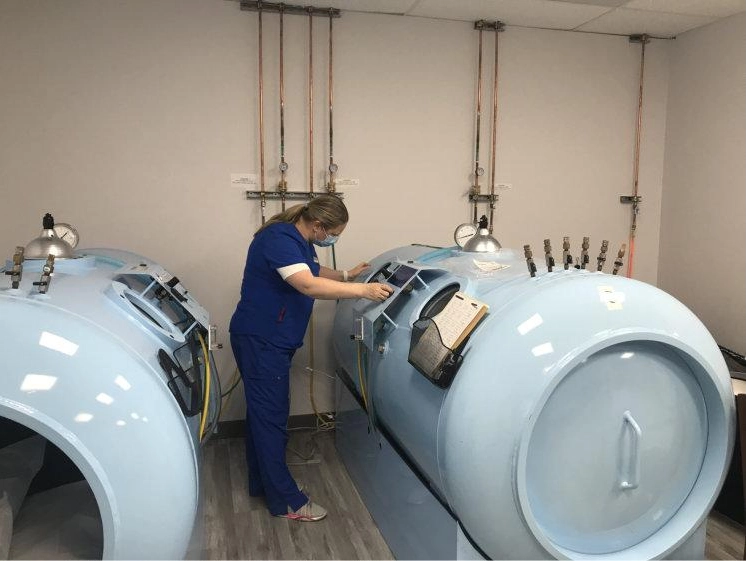
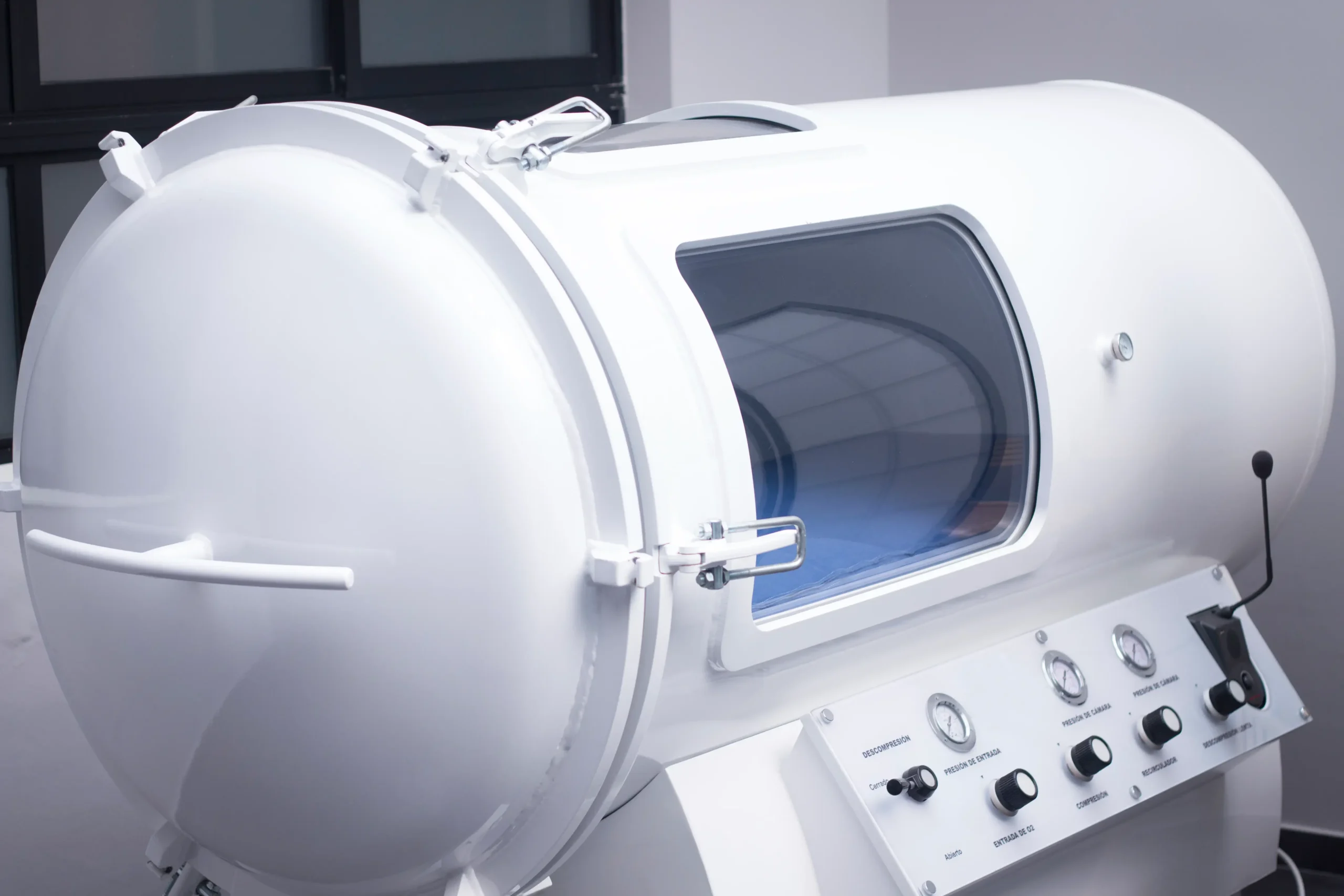
There’s a catch for clinics, though. In fact, most hyperbaric chambers listed “for rent” are soft-shell units that run near 1.3 ATA on air. Clinical hard-shell chambers, however, reach 2.0 to 3.0 ATA, and they’re rarely offered as a simple hyperbaric chamber rental. So a cheap rental quote may not match the chamber your physicians actually need.
How Does Buying a Hyperbaric Chamber Work?
When you buy a hyperbaric chamber, you pay the purchase price, either in cash or through equipment financing. Then you own it. So you control the schedule, the setup and the upgrades. It also means you handle installation, upkeep, and inspections, either in-house or through a service partner.
Rental vs Leasing vs Financing: Key Differences
These terms often get mixed up, but they’re not the same:
Factor | Rental | Lease | Financed purchase | Cash purchase |
Upfront cost | Low | Low to moderate | Down payment | Full price |
Monthly payments | Yes | Yes | Yes, until paid off | None |
Ownership | Never | Optional buyout at end | Yes | Yes |
Typical term | Short, often months | Multi-year contract | Multi-year loan | None |
Maintenance | Often the provider | Set by the lease | Owner | Owner |
Customization | Limited | Limited | Full | Full |
Long-term cost | Highest | Middle | Lower | Lowest |
In short, a rental is short-term and flexible. A lease, by contrast, is a longer contract, and a lease-to-own deal ends with a buyout. A financed purchase, meanwhile, makes you the owner from day one.
How Much Does It Cost to Rent or Buy a Hyperbaric Chamber?
Hyperbaric Chamber Rental Costs
First, published hyperbaric chamber rental cost figures mostly cover soft-shell home units. So treat them with care. For a clinical hard-shell chamber, though, a rental or lease quote depends on the chamber type, term length, delivery, oxygen supply, and service terms. So always ask for a written, all-in quote. That way, delivery, setup, and pickup fees don’t surprise you later.
Monoplace vs Multiplace Hyperbaric Chamber Purchase Costs
The hyperbaric chamber cost to buy, by contrast, depends mostly on the type. For example, clinical monoplace chambers often run $80,000 to $250,000. Multiplace systems, on the other hand, start around $500,000 and can pass $2 million. We also break these ranges down in our detailed look at hyperbaric chamber cost.
Hidden Costs: Installation, Oxygen Supply, Training, and Maintenance
Still, the chamber price is only part of the bill. Clinics also budget for:
- Site work: A stronger floor, power, airflow, and fire safety.
- Installation and commissioning: Delivery, rigging, hookup, and testing.
- Oxygen supply: Tanks, liquid oxygen or a bulk system, plus a manifold.
- Training: Hands-on chamber training for staff before the first patient.
- Maintenance: Routine checks, repairs, and new windows and seals.
These costs also apply whether you rent or buy. However, a rental may bundle some of them into the monthly fee.
What Are the Pros and Cons of Renting a Hyperbaric Chamber?
Benefits of Renting for New or Expanding Clinics
First, hyperbaric chamber rentals keep cash in the bank. Because there’s no large capital expense, a new clinic can start treating patients sooner. A hyperbaric oxygen chamber rental also lets you test real patient demand before you commit. And if the provider handles service, your team carries less maintenance work.
Rental Limitations: Availability, Contract Terms, and Customization
Renting has real limits, though. First, if you want to rent a hyperbaric oxygen chamber for clinical use, you’ll find few hard-shell options. Second, contracts may include minimum terms, auto-renewal, and fees for wear and damage. Third, you can’t customize a rented chamber to your room or your protocols. And over time, you pay more and own nothing.
When Is Short-Term Chamber Rental a Practical Option?
Even so, short-term hyperbaric chamber rental fits a few clear cases. For example, it can bridge a gap while your purchased chamber is being built. It can also cover a pilot program or a temporary site. Beyond that, though, renting gets expensive fast.
What Are the Pros and Cons of Buying a Hyperbaric Chamber?
Long-Term Ownership and Equipment Control
When you buy a hyperbaric chamber, every treatment adds to your return instead of a landlord’s. You also choose the exact model, pressure rating, and options. Plus, a well-kept hard-shell chamber can serve for decades, so it keeps residual value.
Upfront Investment and Ongoing Maintenance Responsibilities
The trade-off, though, is cost and work. First, buying means a large capital expense, or a loan. As the owner, you’re also responsible for inspections, repairs, and recertification. So plan a service budget from day one.
New vs Certified Pre-Owned Hyperbaric Chambers
There’s also a middle path. Many hyperbaric chambers for sale today are certified pre-owned hard-shell units. They cost less than new ones, yet you still own them. At PCCI, for instance, each recertified monoplace hyperbaric chamber goes through a 50-point inspection. It also comes with a 6-month warranty, or an optional 12-month warranty. So for many clinics, this lowers the barrier to ownership without renting.
How Do Clinics Calculate the Total Cost of Ownership?
Initial Investment vs Monthly Operating Expenses
Total cost of ownership (TCO) adds up all a chamber costs over its life. So for a purchase, that’s the price, installation, oxygen, staff training, and upkeep. For a hyperbaric chamber rental, on the other hand, it’s every monthly payment plus fees. In money terms, buying is mostly a capital cost (CapEx), while renting is mostly an operating cost (OpEx).
Leases, however, add one more wrinkle. Under the ASC 842 rules, most leases longer than 12 months now show up on a firm’s balance sheet. So a lease doesn’t always keep a chamber off the books.
Patient Volume, Chamber Utilization, and Revenue per Session
After all, your chamber utilization rate drives the whole decision. For example, Medicare pays hospital outpatient HBOT under code G0277, per 30-minute unit. In 2024, that rate was about $132 per unit, so a 90-minute session brought in roughly $397 for the facility. Your actual payer mix and rates will differ, of course. Still, the math shows why steady volume favors ownership.
How to Calculate the Rental vs Buying Break-Even Point
Luckily, the math is simple:
Break-even months = (purchase price + installation) ÷ (monthly rent − monthly ownership costs)
Past that point, buying costs less than renting. So the more sessions you run, the faster you reach it.
Example: Comparing Rental and Purchase Costs Over Five Years
So here’s an illustrative example. Note that these numbers are assumptions for a clinical monoplace, not real quotes:
- Purchase price: $150,000
- Installation and site prep: $25,000
- Owner maintenance: $5,000 a year
- Rental fee: $6,000 a month, with service included
Year | Total rental cost | Total ownership cost |
|---|---|---|
1 | $72,000 | $180,000 |
2 | $144,000 | $185,000 |
3 | $216,000 | $190,000 |
4 | $288,000 | $195,000 |
5 | $360,000 | $200,000 |
In this example, then, buying breaks even against hyperbaric chamber rental at about 31 months. By year five, the owner has spent $160,000 less and still owns the chamber. In addition, at about $397 per session, the rental needs around 15 sessions a month just to cover rent. Ownership, by contrast, needs about 8. Your numbers will differ, so run this with real quotes.
Thinking about owning your first chamber?
After all, the right chamber, room, and budget all come down to your patient volume and protocols. So talk to our engineers about new or certified pre-owned chambers built for your clinic.
Which Hyperbaric Chamber Is Right for Your Clinic?
Monoplace vs Multiplace Chambers
First, most outpatient clinics start with a monoplace chamber, which treats one patient at a time. Our Althea 4200, for example, seats the patient upright and fits a 48-inch doorway. Hospitals and high-volume programs, on the other hand, often choose a multiplace chamber that treats 2 to 30 patients with staff inside.
Operating Pressure, Patient Capacity, and Clinical Requirements
Match the chamber to your treatment protocols first. For instance, clinical HBOT usually runs at 2.0 to 3.0 ATA, which needs a hard-shell chamber. Patient capacity, oxygen supply, and control systems then follow from your expected volume.
Facility Space, Utilities, and Installation Requirements
Next, check your room: floor loading, door width, ceiling height, power, airflow, and oxygen storage. This step matters for rentals too, because a rented chamber still needs a safe, code-compliant room.
What Safety and Regulatory Requirements Should Clinics Consider?
FDA Clearance and Intended Medical Use
First, the FDA treats hyperbaric chambers as Class II medical devices. So for medical treatment, use a chamber with FDA 510(k) clearance for your intended uses. Soft-shell rentals, by contrast, are cleared only for acute mountain sickness, so they don’t fit most clinical programs.
ASME PVHO-1, PVHO-2, and NFPA 99
Also, every hard-shell chamber should be built to ASME PVHO-1. Then ASME PVHO-2 guides in-service inspection. NFPA 99 Chapter 14 also sets fire safety rules for the room and the chamber. Importantly, these rules apply whether you rent or buy.
Operator Training, Inspections, and Preventive Maintenance
Meanwhile, in August 2025, the FDA reminded providers to follow device instructions, train staff, prevent fires, watch patients, and maintain equipment as the manufacturer directs. So these duties stay with your clinic, even if someone else owns the chamber.
Who Handles Maintenance, Repairs, and Recertification?
Maintenance Responsibilities Under Rental and Lease Agreements
Under many hyperbaric chamber rentals, the provider handles service. Under leases, however, the contract decides. So read the fine print on upkeep, repairs, how fast help arrives, and who pays for damage.
Maintenance Requirements for Chamber Owners
Owners, by contrast, take on upkeep, repairs, and recertification. For example, acrylic windows and seals need to be swapped out from time to time under PVHO-2. Our Althea 4200 also needs a service check every two years. So plan for both routine costs and the odd repair.
Downtime, Service Contracts, and Long-Term Support
Downtime also costs you sessions and income. So whether you rent or buy, ask how fast help arrives. At PCCI, our chambers need no set service contract. Still, we offer routine upkeep, emergency repairs, and a 12-month warranty on our service work.
When Should a Clinic Rent, Lease, or Buy?
New Clinics Testing Patient Demand
First, a short hyperbaric chamber rental or a lease can help a new clinic test demand. Still, make sure any hyperbaric chamber for rent fits your clinical needs.
Established Clinics With Consistent Treatment Volume
Steady volume, however, favors buying. In fact, if you buy hyperbaric chamber equipment for a busy clinic, the more sessions you run, the faster ownership pays off.
Hospitals Expanding Hyperbaric Treatment Capacity
Hospitals most often buy. That’s because multiplace chambers are built to order, so you can rarely rent one.
Clinics Considering Certified Pre-Owned Chambers
Certified pre-owned chambers cut the upfront cost, but you still own them. So this is a smart path when the budget is tight.
Clinic situation | Rental | Lease | Financed purchase | Cash purchase |
New clinic testing demand | Good fit | Good fit | Possible | Less likely |
Established clinic, steady volume | Poor fit | Possible | Good fit | Best fit |
Hospital expanding capacity | Rarely available | Possible | Good fit | Good fit |
Tight budget, wants ownership | Short-term only | Possible | Good fit (pre-owned) | Good fit (pre-owned) |
How PCCI Supports Hyperbaric Chamber Ownership
Again, we don’t rent, lease, or finance chambers. Instead, we help clinics own them well. So we design and build chambers, plan the room, install the system, and train your staff. After that, we handle upkeep, repairs, refurbishment, and recertification. Also, every patient vessel we build follows ASME PVHO-1, and our clinical chambers carry FDA 510(k) clearance.
Frequently Asked Questions
Is it better to rent or buy a hyperbaric chamber for a clinic?
It depends on your volume and timeline. Renting suits short-term needs and demand testing, while buying usually costs less once treatment volume is steady. So compare the total cost over five years, not just the monthly fee, and make sure the chamber meets your clinical needs.
How much does it cost to rent a medical hyperbaric chamber?
It varies widely because most published rental prices cover soft-shell home units, which aren’t clinical chambers. Hard-shell medical chambers, by contrast, are rarely rented, and quotes depend on chamber type, term, delivery, and service. So always ask for a written, all-in quote before you sign.
Can a clinic lease a hyperbaric chamber instead of buying one?
Yes, some providers and equipment finance companies offer leases. A lease spreads cost over a multi-year contract, and a lease-to-own deal ends with a buyout. However, under ASC 842, most longer leases still appear on the balance sheet. So review the terms with your accountant.
How long does it take for a hyperbaric chamber to pay for itself?
It depends on price, payer mix, and how many sessions you run. For instance, in our illustrative monoplace example, buying broke even against renting at about 31 months. So busy clinics can reach that point sooner, while low-volume clinics may take longer to see a return.
Who pays for maintenance on a rented hyperbaric chamber?
Usually the provider, but not always. Some rentals include service, while others charge for repairs or damage. Leases, meanwhile, vary even more. So check the contract for preventive maintenance, repair costs, response times, and who pays if the chamber is down.
Is buying a used hyperbaric chamber a good option?
It can be, as long as it’s certified. A recertified hard-shell chamber should pass a full inspection and come with a warranty and proper papers. At PCCI, certified pre-owned monoplaces pass a 50-point inspection and carry a 6-month warranty, with a 12-month option.
What should clinics check before signing a chamber rental agreement?
Before you sign a hyperbaric chamber rental, check the chamber type, pressure rating, and FDA clearance. Then check the minimum term, auto-renewal, delivery and pickup fees, and who handles upkeep. Also ask about damage charges, oxygen equipment, staff training, and any rent-to-own credit. Finally, get every term in writing, so nothing changes after delivery.