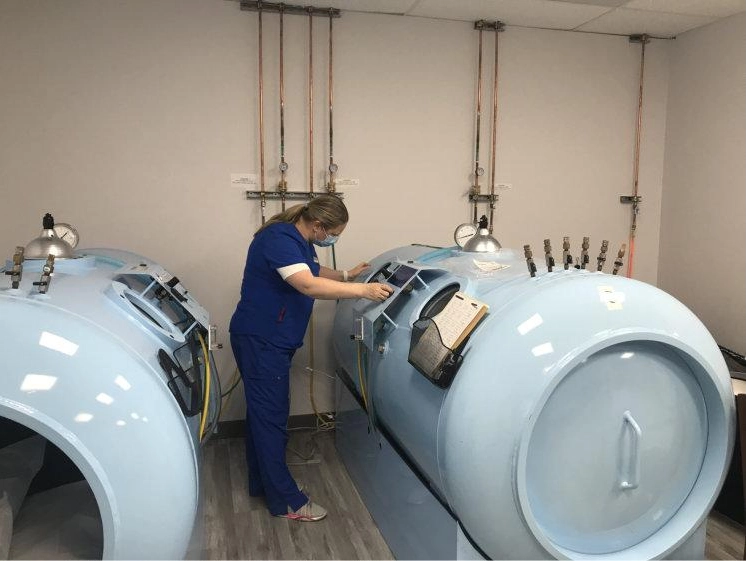

Quick answer: Hyperbaric chamber certification isn’t one stamp from one body. Instead, four groups each cover their own piece. First, ASME PVHO-1 sets how the chamber is built, tested, and stamped. Then the FDA clears medical chambers through 510(k). The UHMS reviews hyperbaric sites, while the NBDHMT certifies staff, such as Certified Hyperbaric Technologists (CHT).
“Is this chamber certified?” sounds like a simple question. But it really hides four. Was the vessel built to code? Is it cleared as a medical device? Does the facility hold accreditation? And do the staff hold credentials? So a seller who says “certified” without naming which one hasn’t really answered.
At a certified hyperbaric chamber manufacturer, PCCI Hyperbaric Systems designs, builds, and recertifies hard-shell chambers, so we deal with these rules every day. That’s why this guide sorts out who certifies what. It also shows you which papers to ask for before you buy.
What Is Hyperbaric Chamber Certification?
Hyperbaric chamber certification means the vessel was built and tested to a named code. It also means there are papers to prove it. In the US, that code is ASME PVHO-1, the safety standard for pressure vessels for human occupancy (PVHO). It applies to any chamber that holds people at more than 2 psi above or below room pressure. So these are the core hyperbaric chamber certification requirements.
Certification vs. Compliance vs. Accreditation
People mix these three words up all the time. So here’s a quick guide:
- Certification is a formal sign-off from a named body, backed by records. For instance, a stamped PVHO-1 vessel or a CHT credential both count.
- Compliance, by contrast, means meeting a standard’s rules. But a “compliant” claim isn’t proof unless papers back it up.
- Accreditation, meanwhile, is a review of a whole program or site, such as a UHMS survey of a clinic.
Why Chamber Certification Matters for Safety and Clinical Use
After all, a hyperbaric chamber holds people under pressure, often with high oxygen. A weak weld, a worn window, or a bad relief valve can turn serious fast. That’s why hyperbaric chamber certification matters: it gives you clear proof the vessel was built and tested to code. It also helps with permits, insurance and surveys later on. In short, hyperbaric chamber safety standards exist to stop those failures.
Who Certifies Hyperbaric Chambers?
Hyperbaric chambers are certified and regulated across three main areas: equipment and manufacturing standards, facility accreditation, and personnel certification.
ASME (American Society of Mechanical Engineers) and Pressure Vessel Standards
ASME writes the codes, while the maker builds to them and stamps the vessel. In short, PVHO-1 covers design, building, inspection, testing, marking, and stamping. That’s the basis of hyperbaric pressure vessel certification. A full package then includes the PVHO-1 Form GR-1 data report and window forms VP-1 through VP-5. You can also read more about what the ASME PVHO-1 standard requires.
FDA Clearance for Medical Hyperbaric Chambers
For medical use, though, the FDA treats hyperbaric chambers as Class II devices under 21 CFR 868.5470, product code CBF. So a medical chamber model most often needs 510(k) clearance for its planned uses. People often search for an “FDA-approved hyperbaric chamber,” but the right term is “FDA cleared.”
UHMS Accreditation for Hyperbaric Facilities
The UHMS, by contrast, reviews hyperbaric sites, not chambers. Its program, called HFA, has checked and approved more than 294 sites in over 25 years
NBDHMT Certification for Hyperbaric Professionals
Meanwhile, the NBDHMT certifies people, not gear. Its best-known card is the CHT, short for Certified Hyperbaric Technologist.
Who certifies what, at a glance:
Body | Covers | You get | Does not cover |
ASME (via PVHO-1) | How the vessel is built and tested | Stamped vessel, Form GR-1, window forms | Medical use, staff or site |
FDA | The chamber as a medical device | 510(k) clearance for set uses | Your site or your staff |
UHMS | Your whole hyperbaric program | Site accreditation | How the chamber is built |
NBDHMT | Each staff member | CHT card | The chamber or the site |
What Are the Main Hyperbaric Chamber Certification Standards?
ASME PVHO-1: Design, Fabrication and Pressure Testing
PVHO-1 sets the rules for the vessel itself. So it covers materials, welds, windows, doors, piping, and pressure tests. The current edition, meanwhile, is PVHO-1-2023.
ASME PVHO-2: In-Service Inspection and Maintenance
PVHO-2, by contrast, covers the chamber once it’s in use. So its ASME PVHO-2 inspection rules guide checks, repairs, and the service life of acrylic windows.
ASME BPVC Section VIII, Division 1
The vessel also follows the ASME boiler and pressure vessel code, Section VIII. That’s why steel chambers often carry an ASME “U” stamp next to their PVHO-1 papers.
NFPA 99: Fire and Life Safety Requirements
Meanwhile, NFPA 99, Chapter 14 sets fire rules for hyperbaric sites. For instance, it calls for fire suppression in multiplace chambers. It also treats air above 23.5% oxygen as oxygen-rich. These are the key NFPA 99 hyperbaric chamber requirements.
FDA 510(k) Clearance and Medical Device Requirements
For medical chambers, FDA 510(k) clearance then sits on top of the building codes. That’s what hyperbaric chamber FDA clearance means in practice. The maker also registers its site with the FDA and lists its devices. Outside the US, though, other standards may apply, such as CSA Z275.1 in Canada or EN 14931 in Europe.
In short, these rules each do a different job. So which ones apply depends on your chamber and where you’ll use it.
How Is a Hyperbaric Chamber Tested and Documented?
Design Review and Engineering Requirements
First, each chamber starts with a design spec that sets its pressure, size, and use. Then engineers size the shell, doors, and windows to that design pressure.
Material Traceability, Welding and Fabrication Records
Next, every plate and weld must trace back to approved sources. Welders and weld methods also need to pass tests, and each one gets a record.
Pressure Testing and Non-Destructive Examination
As part of hyperbaric chamber testing, the vessel gets a pressure test and weld checks, called non-destructive examination (NDE). These checks find flaws without harming the vessel. Each acrylic window, too, gets its own pressure test and paperwork.
Nameplates, Markings and Manufacturer’s Data Reports
Then the finished vessel gets a nameplate with its maker, serial number, and ratings. That plate then ties to the data reports. So anyone can match the chamber to its papers.
Final Inspection and Acceptance Documentation
Finally, the chamber passes a last check and a test at your site. Those records then go in your file for good. In fact, they’re the core of your hyperbaric chamber certification documentation.
Sample paper checklist for your buying team:
- ASME Section VIII data report and PVHO-1 Form GR-1
- Window forms VP-1 through VP-5
- Nameplate photo with serial number and ratings
- Pressure test and NDE records
- FDA 510(k) number, if used for medical care
- Operating and maintenance manuals
- Final inspection and site acceptance records
What Is the Difference Between Chamber Certification and Facility Accreditation?
What Does UHMS Hyperbaric Facility Accreditation Cover?
Some people call this hyperbaric chamber accreditation. But UHMS accreditation looks at your whole program, not just the chamber. Its surveyors check how you’re run, who oversees care, staff training, and patient care. They also look at quality, emergency plans, safety, and the room itself.
How Are Staff Training, Equipment, and Patient Safety Evaluated?
But the survey goes beyond paperwork. Surveyors also look at the chamber and the gear around it. So they check its condition, your upkeep logs, and how well you follow safety rules. In fact, the UHMS program itself holds ISO 9001 status. The Joint Commission also accepts it as a partner program.
Is UHMS Accreditation Required for Every Clinic?
No federal rule requires it for every clinic, so it’s mostly a choice. Even so, many hospitals and insurers value it. And if your program changes in a big way, UHMS asks you to tell them. A move, a merger, or new key staff, for instance, can trigger a new review.
Is your chamber’s paperwork ready for a survey?
Missing data reports or old window records can stall a review. So our engineers can inspect your chamber, fix gaps, and build a full compliance package.
Do Hyperbaric Chamber Operators Need Certification?
Certified Hyperbaric Technologist (CHT) Requirements
Many employers also want hyperbaric staff to hold the CHT. To earn it, NBDHMT requires a 40-hour approved course, 480 clinical hours, and a 120-question exam. We also walk through how CHT certification works for hyperbaric teams in a separate post.
Hyperbaric Nursing Credentials and Safety Training
Nurses may hold the CHRN, a hyperbaric nursing card, instead. NFPA 99 also says each site must name a safety director. That person leads safety checks and drills.
Professional Certification vs. Chamber-Specific Operator Training
Still, a staff card proves only general know-how. It doesn’t teach anyone your exact chamber. So each operator also needs hands-on training on the model they’ll run. In other words, hyperbaric chamber operator certification is about people, not gear.
Does Hyperbaric Chamber Certification Expire?
Initial Manufacturing Documentation vs. Ongoing Compliance
The build papers don’t expire, since they record how the chamber was made. Staying compliant, though, is ongoing. So checks, upkeep, and window service keep the chamber safe year after year.
When Does a Chamber Need Reinspection?
But there’s no single end date for each chamber. Instead, it depends on the maker’s schedule, PVHO-2 inspection rules, window service limits, and local law. A routine hyperbaric chamber inspection should happen on a set plan, and staff should check the chamber before each use.
What Happens After Major Repairs or Refurbishment?
Big repairs, though, can change what the first papers cover. So the chamber may need new checks and tests, plus new records. In short, hyperbaric chamber recertification restores that paper trail. That’s where chamber refurbishment and recertification comes in, mainly for older or pre-owned chambers.
How Does ASME PVHO-2 Apply to Existing Chambers?
For chambers already in use, PVHO-2 then guides how to inspect, maintain, and repair them. In particular, it helps judge when acrylic windows are still fit for service.
How Much Does Hyperbaric Chamber Certification Cost?
Engineering, Inspection and Testing Costs
For a new chamber, code design, checks, and tests are part of the build price. For older chambers, though, the cost depends on the chamber’s shape and what needs fixing.
Medical Device Regulatory Submission Costs
FDA 510(k) clearance, meanwhile, is most often the maker’s cost, built into the chamber price. The FDA also sets its own review fees each year.
Facility Accreditation and Training Expenses
UHMS also posts its fees. Right now, a full survey costs $2,500 to apply plus $7,500 for the visit itself. Staff cards add more, too. CHT renewal, for instance, costs $100 every two years, according to NBDHMT.
Why Certification Costs Vary by Chamber Type and Project
A one-person monoplace is simpler to test than a three-lock multiplace. So costs grow with size, locks, systems, and site needs. In other words, ask for a written quote rather than trusting a flat price.
How to Verify a Hyperbaric Chamber’s Compliance Before Buying
Confirm the Manufacturer and Chamber Identification
Start with the basics: who built it, and what’s the model and serial number? Then match those to the nameplate, since that’s where hyperbaric chamber certification starts.
Review Pressure Ratings, Nameplates, and Test Records
Next, check the design and working pressure on the hyperbaric chamber certification papers. After that, make sure the test logs and data reports match the plate.
Verify FDA Clearance for the Intended Medical Use
For medical care, also ask for the 510(k) number. Then check that it covers the uses you plan.
Check Maintenance History, Repairs and Replacement Parts
For a used chamber, ask for the full service log and any past hyperbaric chamber certification records. Also look for when the windows were last changed, and for any big repairs.
Request Technical Documentation and Warranty Details
Finally, get the manuals, the warranty, and all the code records in writing.
Buyer’s check sheet:
Item to check | What to write down |
Maker and model | Name and model number |
Serial number | Matches the nameplate and papers |
Design and working pressure | Values in ATA or psi |
Standards built to | PVHO-1, Section VIII, NFPA 99 |
FDA 510(k) number | If used for medical care |
Test records | Dates and results |
Service history | Repairs, new windows and seals |
Warranty | Length and coverage |
How PCCI Supports Hyperbaric Chamber Compliance
Custom Chamber Engineering and ASME PVHO-1 Requirements
First, we design each patient vessel to ASME PVHO-1 and Section VIII. A licensed engineer also reviews the work. And our division head, Ramesh Dixit, PE, sits on ASME PVHO, NFPA, and UHMS safety groups.
Manufacturing Quality Control and Pressure Testing
We also build under an ISO 9001:2015 quality system, and our clinical chambers carry FDA 510(k) clearance. Plus, each chamber gets a pressure test before it ships, with full records.
Chamber Inspection, Maintenance and Refurbishment
For older chambers, meanwhile, we offer a 50-point check, repairs, and new tests to PVHO-1 and NFPA 99. Then we hand over a full set of papers for your survey. Note, though, that we don’t issue FDA clearance, UHMS status, or CHT cards. Those come from their own bodies.
Frequently Asked Questions
What does hyperbaric chamber certification mean?
Hyperbaric chamber certification most often means the chamber was built and tested to a named code, with records to prove it. In the US, that code is ASME PVHO-1. Medical chambers also need FDA 510(k) clearance. Site and staff approvals, though, are separate. So always ask which one a seller means.
Who certifies a hyperbaric chamber in the United States?
No single body does it all, so hyperbaric chamber certification has several parts. The maker builds and stamps the vessel to ASME PVHO-1, while the FDA clears medical chambers through 510(k). The UHMS, by contrast, accredits facilities, and the NBDHMT certifies staff. So each one covers its own part of the picture.
Is ASME PVHO-1 certification required for hyperbaric chambers?
In practice, yes, for chambers that hold people. That’s because NFPA 99 says hyperbaric chambers must be built to PVHO-1, and many states expect it too. Some states, like Hawaii, also write it into their rules. So always ask for the PVHO-1 data report and window papers.
What is the difference between FDA clearance and ASME compliance?
ASME PVHO-1 covers how the pressure vessel is designed, built, and tested. FDA 510(k) clearance, on the other hand, covers whether a chamber can be sold as a medical device for set uses. So a clinical chamber needs both. One is about safe building, and the other is about medical use.
Is UHMS accreditation the same as chamber certification?
No. UHMS reviews the whole site, including staff, safety, patient care, and upkeep. Hyperbaric chamber certification, by contrast, covers only the vessel and how it was built and tested. So even a site with UHMS status still needs chambers built and papered to code.
Does a hyperbaric chamber need to be recertified?
Often, yes, mainly after big repairs, a move, or a new owner, since those can change how the chamber stands. The first build papers don’t expire, though. Still, regular PVHO-2 checks, window service, and upkeep keep the chamber safe. Used chambers should also be recertified before reuse.
Do you need to be certified to operate a hyperbaric chamber?
It depends on your state, site, and role, since rules vary. But many employers expect certified staff, such as CHTs or CHRNs. Each operator also needs hands-on training on their own chamber. And NFPA 99 says each site must name a safety director.
How can I check if a hyperbaric chamber is compliant?
Match the nameplate to the data reports, then review the pressure ratings and test records. For medical use, also confirm the FDA 510(k) number. Finally, check the service history, window dates, and warranty. So if anything is missing, ask the seller to explain in writing.
What documents should a buyer request from the manufacturer?
First, ask for the Section VIII data report, the PVHO-1 Form GR-1, and the window forms VP-1 to VP-5. Also request test records, a nameplate photo, the FDA 510(k) number for medical use, and the manual.