Quick answer: A diving chamber is a pressure vessel for human occupancy (PVHO) that controls the pressure and gas around working divers. Also, the two main systems are the deck decompression chamber (DDC) and the saturation diving system. First, a DDC handles surface decompression and emergency recompression after short dives. A saturation system, by contrast, lets divers live under pressure for days or weeks, then decompress once.
A diving chamber keeps working divers safe before, during, and after the dive. So on a dive vessel or offshore platform, it turns a risky ascent into a controlled one. And when something goes wrong, it doubles as the first line of treatment.
At PCCI Hyperbaric Systems, we build multi-lock chambers and saturation systems. So this guide explains both main diving chamber systems in simple terms: how they work, what’s inside, and how to pick one.
What Is a Diving Chamber?
A diving chamber is a sealed pressure vessel that holds divers at a set pressure on the surface. In other words, it lets divers finish decompression, live at depth pressure, or get treated for decompression sickness (DCS) without staying in the water.
Because people sit inside, every diving chamber is a pressure vessel for human occupancy, or PVHO. That’s also why ASME PVHO-1 has a section just for diving systems. So commercial diving chambers come in two main forms:
- Deck decompression chambers (DDCs): First, these serve surface-supplied diving for decompression and treatment.
- Saturation diving systems: Then these serve long, deep jobs, where divers live under pressure between shifts.
Both are hyperbaric chambers for diving. However, they serve very different jobs, as you’ll see below.
What Is a Deck Decompression Chamber (DDC)?
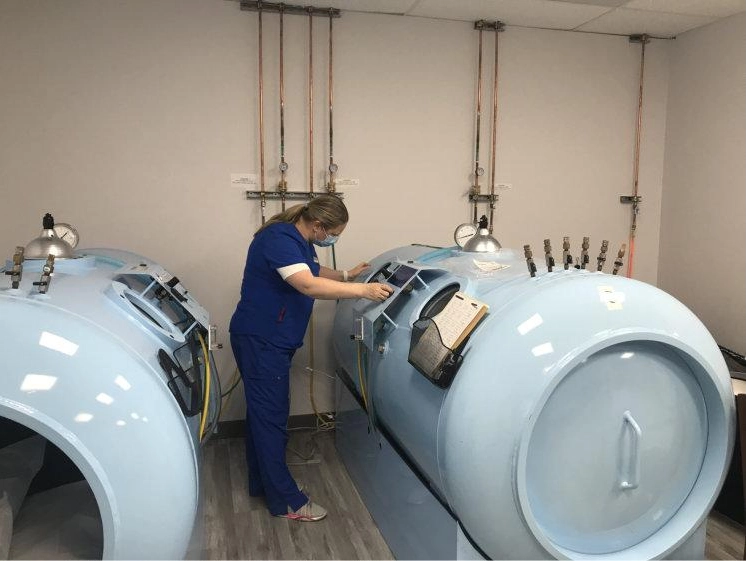
A deck decompression chamber, or DDC, is a diving decompression chamber mounted on a ship, barge, or offshore platform. It supports surface-supplied diving, so divers breathe gas through a hose from the surface. It also gives the dive team a way to recompress an injured diver on site.
Most DDCs are also double-lock chambers. In fact, in the US, OSHA requires many commercial dive sites to have a dual-lock, multiplace chamber that can reach at least 165 feet of seawater (6 ATA).
How a Deck Decompression Chamber Works
Still, the main job of a DDC is surface decompression. First, the diver finishes part of the decompression in the water. Then they climb out, strip off gear, and enter the chamber. Next, the operator quickly brings the chamber back to depth pressure, and the diver finishes decompression there.
Speed matters here, too. Because nitrogen is still leaving the body, the surface interval must stay short. So US Navy procedures and OSHA rules both work around a window of about five minutes. Then, inside, the diver often breathes oxygen through a built-in breathing system (BIBS), which speeds nitrogen removal.
A DDC also serves as a surface decompression chamber for emergencies. So if a diver shows signs of DCS or gas embolism, the team can recompress them at once. That switch, from planned decompression to treatment, is the core difference between decompression and recompression chambers.
Main Components of a DDC
So a typical deck decompression chamber has these parts:
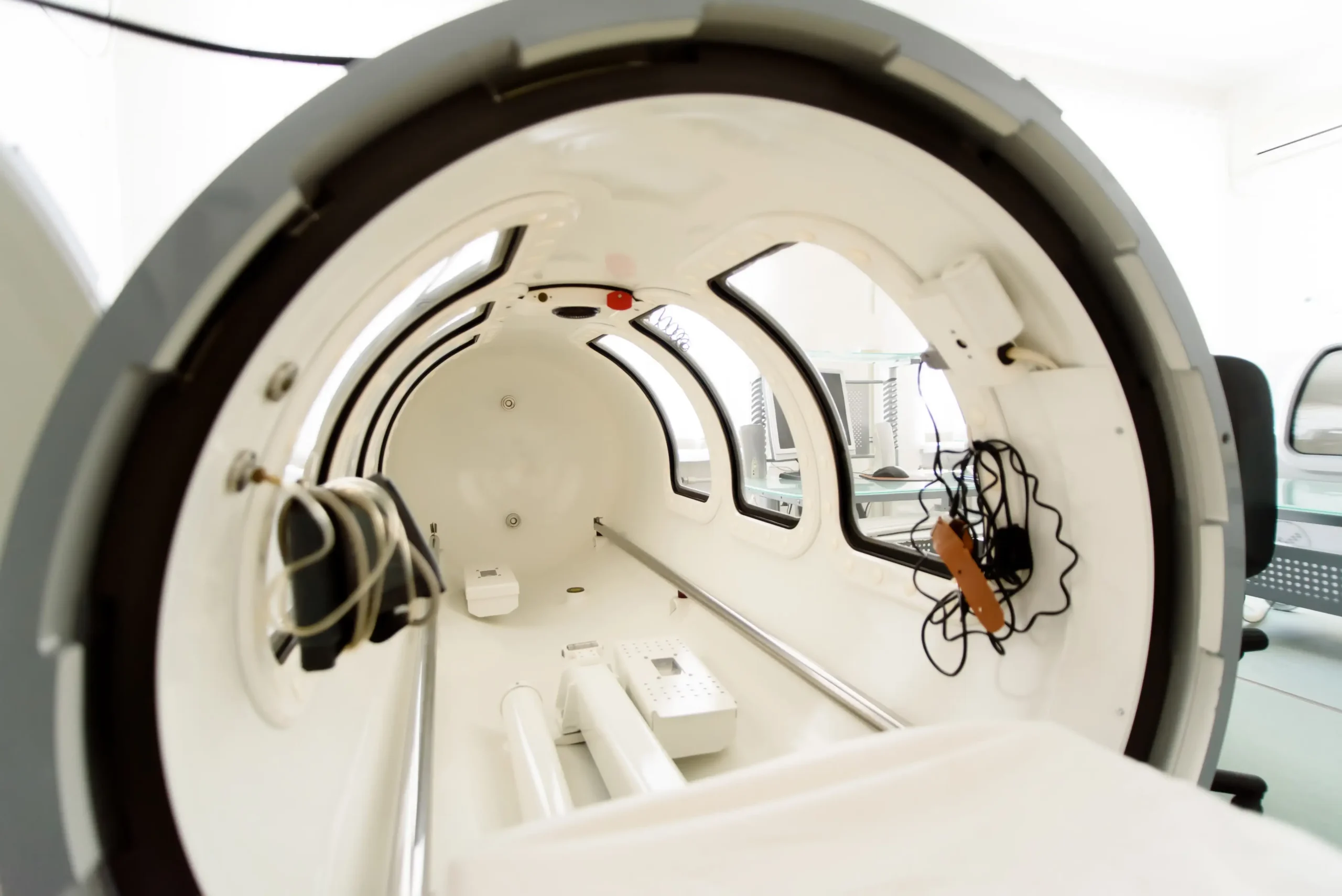
- Main lock: First, the larger room where divers decompress or get treated.
- Entry lock: A second compartment, so a tender or doctor can enter while the main lock stays under pressure.
- Medical lock: Also, a small pass-through for food, medicine, and supplies.
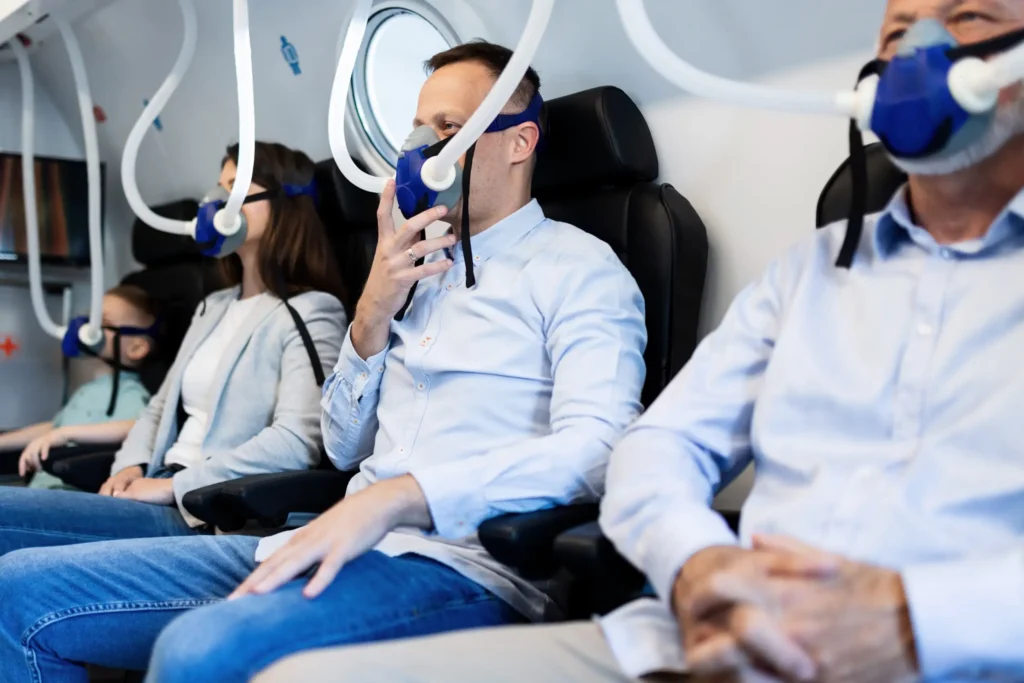
- BIBS: Masks that deliver oxygen or treatment gas, while exhaled gas vents outside the chamber.
- Gas supply system: Air and oxygen, as well as a reserve or emergency gas supply.
- Control panel: Gauges for each lock, valves, and two-way voice links, too.
- Safety gear: Finally, oxygen and CO2 sensors, CO2 scrubbing, lights, and fire suppression.
What Is a Saturation Diving System?
A saturation diving system, by contrast, is a set of linked chambers where divers live under pressure for days or weeks. Instead of decompressing after every dive, they stay at the pressure of the worksite. Then, at the end of the job, they decompress just once.
How Saturation Diving Works
The idea is simple, though. After about 24 hours at a given depth, a diver’s tissues absorb as much inert gas as they can hold. In other words, they’re “saturated.” From then on, decompression takes the same time, whether the diver stays one day or 15.
So divers live in a pressurized living chamber on deck. Then, each shift, a few of them climb into a diving bell, which a crane lowers to the work site. Afterward, the bell returns and locks back onto the system. That process is called transfer under pressure, so divers never leave their storage pressure.
At depth, nitrogen dulls the mind. This is called narcosis. So saturation divers breathe a helium and oxygen mix, or heliox. Helium is lighter and won’t cause narcosis. But it makes voices squeaky and pulls heat from the body.
Decompression comes last, and it’s slow. For instance, DAN describes a rule of thumb of about one day per 100 feet of seawater, plus a day. Similarly, the US Navy Diving Manual sets the pace at 6 feet per hour when deep, then slows it to 3 feet per hour near the top. It also limits travel to 16 hours a day, so divers can rest.
Key Components of a Saturation System
So a saturation diving chamber system has these main parts:
- Living chambers: First, bunks, a table, and space where divers eat, sleep, and rest under pressure.
- Transfer chamber: Then the link between the living chambers and the diving bell.
- Diving bell: Also called a submersible decompression chamber (SDC) or personnel transfer capsule (PTC). So it carries divers between the deck and the worksite.
- Mating flange or trunk: A sealed connection, so the bell can lock onto the system under pressure.
- Entry and medical locks: Also for people, food, medicine, and supplies.
- Life-support system: Controls oxygen and CO2, as well as heat and humidity.
- Gas supply and gas reclaim system: Stores heliox and recovers helium for reuse, since helium is costly.
- Chamber control room: Where life support technicians watch pressure, gas, and divers all day and night.
- Emergency evacuation: Finally, a hyperbaric rescue unit or lifeboat that keeps divers under pressure if the crew must leave the vessel.
For example, our Topside 7810D saturation system, built for tunnel boring machine interventions, holds 6 to 25 people at up to 18 bar. It also uses a NATO-style mating flange and CO2 scrubbing. That same pressurized work also drives caisson disease risk in tunnel workers.
Engineering a diving chamber for your operation?
Because depth, crew size, and deck space all shape the right system, it pays to plan early. So talk to our engineers about custom chamber design and fabrication built around your dive profiles and site.
Deck Decompression Chamber vs. Saturation System
Both systems are diving chambers, but they solve different problems. So here’s how they compare:
Feature | Deck decompression chamber (DDC) | Saturation diving system |
Main use | Surface decompression and emergency recompression | Living and working at depth for days or weeks |
Dive type | Surface-supplied air or mixed gas | Deep saturation diving |
Typical depth | Shallower surface-supplied work | Most work between 65 and 1,000 feet, according to DAN |
Breathing gas | Air, with oxygen by BIBS | Mostly heliox |
Time under pressure | Hours | Days to weeks |
Decompression | After each dive | Once, at the end of the job |
Key parts | Main lock, entry lock, medical lock, BIBS | Living chambers, transfer chamber, diving bell, life support, gas reclaim |
Footprint | Compact, single unit | Large, multi-chamber complex |
In short, a DDC is the right tool for shorter, shallower work. A saturation system, on the other hand, makes sense when divers need long bottom times at depth.
Safety, Inspection and Maintenance Considerations
Every diving chamber is a PVHO, so it needs careful engineering and upkeep. Here’s what matters most, then.
Standards and Classification
First, several standards apply to diving chamber design:
- ASME PVHO-1: The safety standard for pressure vessels for human occupancy, which also has a section on diving systems. So it covers design, materials, viewports, piping, fabrication, and pressure testing.
- ASME PVHO-2: Then, in-service inspection and repair.
- OSHA 29 CFR 1910 Subpart T: Also chamber rules for US commercial diving.
- Class society rules: Offshore diving systems are often classed by ABS or DNV, which set their own design and survey rules.
- IMCA guidance: Finally, the International Marine Contractors Association publishes audit guidance for surface and saturation diving systems.
Pressure Testing
Each chamber is pressure tested before use, and again after major repairs. Viewports also need their own testing and paperwork, since acrylic behaves differently from steel.
Inspection and Maintenance
After all, salt air, shaking, and hard use wear chambers down at sea. So seals, windows, valves, gauges, and gas lines need regular checks. Life-support sensors also need calibration. And PVHO-2 guides checks over the chamber’s whole life. That’s also why we offer preventive maintenance and emergency repair for hyperbaric chambers, including chambers from other makers.
Emergency Planning
Every system also needs a plan for fire, gas loss, and escape. So saturation systems carry backup gas and a rescue unit that holds pressure. Teams also run drills on a set schedule.
Choosing the Right Diving Chamber System
Of course, the right diving chamber depends on the job. So start with these questions:
- How deep is the work? First, shallower surface-supplied jobs often need only a DDC, while deep work usually calls for saturation.
- How long will divers stay at depth? Short bottom times suit a DDC, but long jobs favor saturation.
- How many divers? Then crew size sets the number of locks and bunks.
- How much deck space? Saturation systems also need far more room and support gear.
- Which rules apply? Next, check OSHA, class rules and any client needs.
- Who will maintain it? Finally, plan for inspection, recertification, and spare parts from day one.
Older chambers can often stay in service, too. For instance, chamber refurbishment and recertification can bring an old diving decompression chamber back up to code.
Frequently Asked Questions
What is a deck decompression chamber?
A deck decompression chamber, or DDC, is a diving chamber mounted on a dive vessel, barge, or platform. Divers then use it for surface decompression after a dive. It also lets the dive team recompress a diver right away if decompression sickness or gas embolism occurs, so it doubles as an emergency treatment chamber.
How does a deck decompression chamber work?
First, after part of their in-water decompression, the diver climbs out and enters the chamber within a few minutes. The operator then brings the chamber back to depth pressure. Next, the diver finishes decompression inside, often breathing oxygen through BIBS masks, while staff watch pressure and gas levels.
What is the difference between a DDC and a saturation system?
A DDC handles decompression after each short dive, while a saturation system lets divers live under pressure for days or weeks. So saturation divers decompress only once, at the end of the job. A DDC is a compact chamber, whereas a saturation system links living chambers, a transfer chamber, and a diving bell.
What equipment is included in a saturation diving system?
Generally, a saturation diving system has living chambers, a transfer chamber, a diving bell, entry and medical locks, and life support. It also needs gas storage and a gas reclaim system for helium. Finally, it needs a control room and a rescue unit that keeps divers under pressure.
What is a diving bell used for?
A diving bell, also called a submersible decompression chamber or personnel transfer capsule, carries saturation divers between the deck and the work site. It stays at the divers’ storage pressure, so they never decompress on the way. Then it locks back onto the saturation system after each shift.
How are divers transferred under pressure?
First, the diving bell seals onto the saturation system through a mating flange or trunk. Then, once the connection is sealed and pressure matches, divers move between the bell and the transfer chamber. Because pressure never changes, they can go to work and back without decompressing.
What standards apply to diving chambers?
Diving chambers hold people under pressure, so ASME PVHO-1 applies, including its diving systems section. ASME PVHO-2 also covers in-service care. Meanwhile, in the US, OSHA sets commercial diving chamber rules. Offshore systems are often classed by ABS or DNV, too, and many firms follow IMCA audit guidance.
How are commercial diving chambers inspected and maintained?
Commercial diving chambers get pressure tested before service and after major repairs. Then crews check seals, viewports, valves, gauges, and gas systems on a set schedule. Life-support sensors also need calibration, and ASME PVHO-2 guides inspections over the chamber’s working life.