Quick Answer: A hyperbaric chamber is a sealed pressure vessel that raises air pressure above normal, most often to 2.0 to 3.0 times sea-level pressure. Then, inside, a patient breathes close to 100% oxygen, while room air has only 21%. So the extra pressure pushes far more oxygen into the blood plasma and tissues. That’s how hyperbaric oxygen therapy (HBOT) helps wounds heal and also treats problems like decompression sickness.
What is a hyperbaric chamber? Basically, it’s a strong, sealed room or tube that raises the air pressure around you. Doctors then use it to deliver hyperbaric oxygen therapy, or HBOT. But the idea is simple: more pressure plus more oxygen means more oxygen reaches the parts of your body that need it. So this guide explains how these chambers work from the inside out, in words anyone can follow.
What Is a Hyperbaric Chamber?
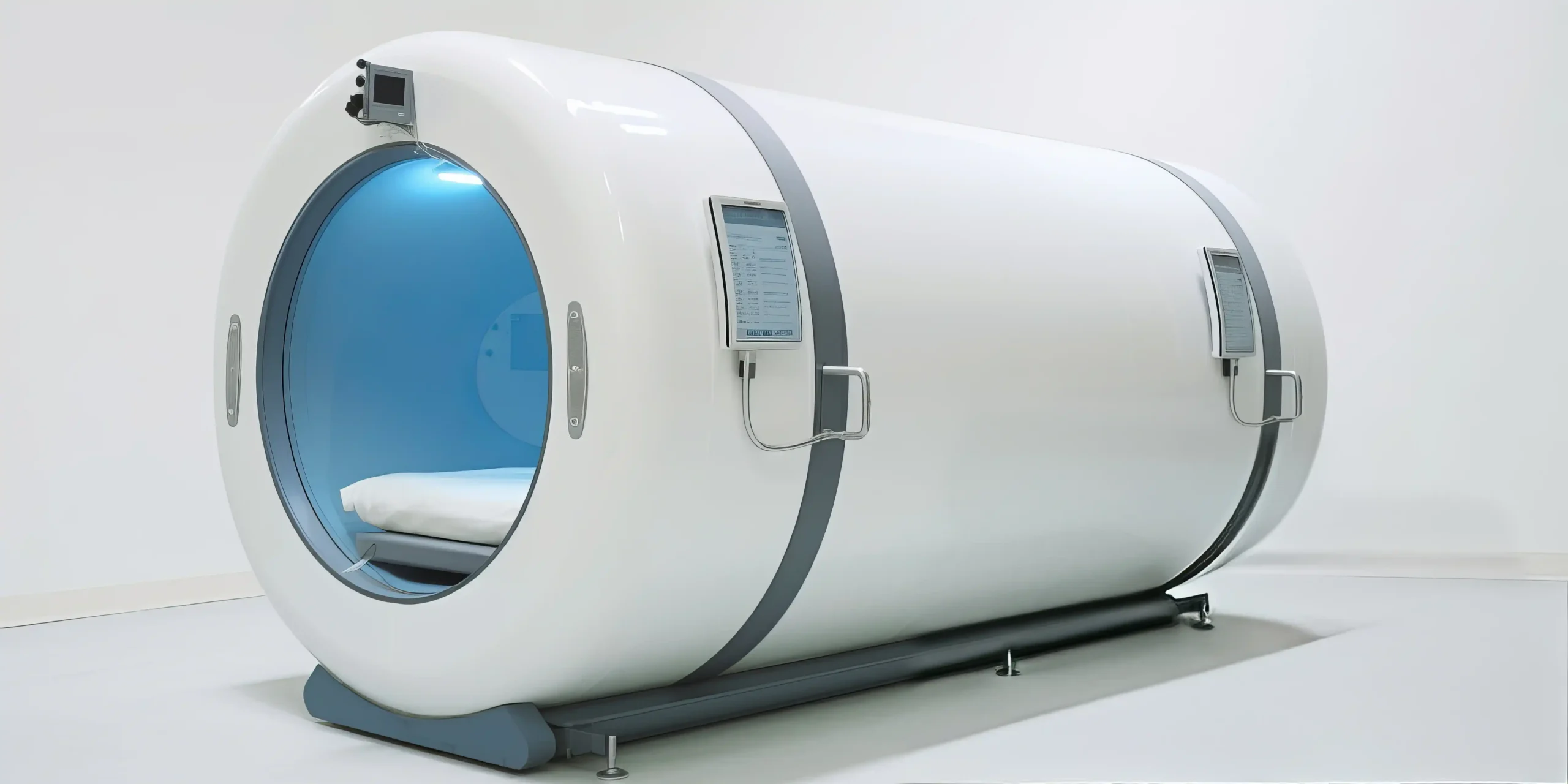
First, a hyperbaric chamber is a pressure vessel for human occupancy. In other words, it’s a vessel built to hold a person safely at a pressure higher than the air outside. After all, “hyperbaric” simply means “above normal pressure.”
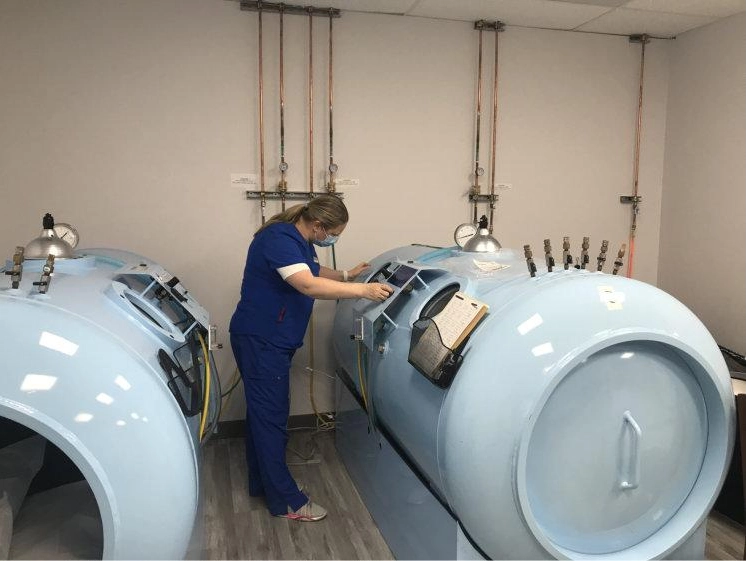
Most medical chambers are hard-shell vessels made of steel or acrylic. So they must follow ASME PVHO-1, the safety standard for pressure vessels that hold people. They also carry FDA 510(k) clearance when they’re used for medical care.
Hyperbaric chamber vs. hyperbaric oxygen therapy
These two terms often get mixed up, though. Simply put, the chamber is the equipment. HBOT, on the other hand, is the treatment: breathing near-100% oxygen while inside a pressurized chamber. Also, according to the UHMS, true HBOT needs a pressure of at least 1.4 ATA.
How Does a Hyperbaric Chamber Work?
A hyperbaric chamber works by raising the air pressure inside a sealed room or tube to about 2 to 3 times normal atmospheric pressure, while the patient breathes close to 100% oxygen. In practice, that happens in four steps: the chamber seals, it adds pressure, it delivers oxygen, and then it slowly lets the pressure back down.
Step 1: Sealing and pressurization
First, the patient settles in and the door seals. Then the operator slowly raises the pressure with compressed air or oxygen. This higher pressure presses on your whole body, including your lungs, so each breath takes in far more oxygen than usual. Your ears may also feel full, like on a plane coming down, so you’ll learn to clear them.
Step 2: Oxygen delivery
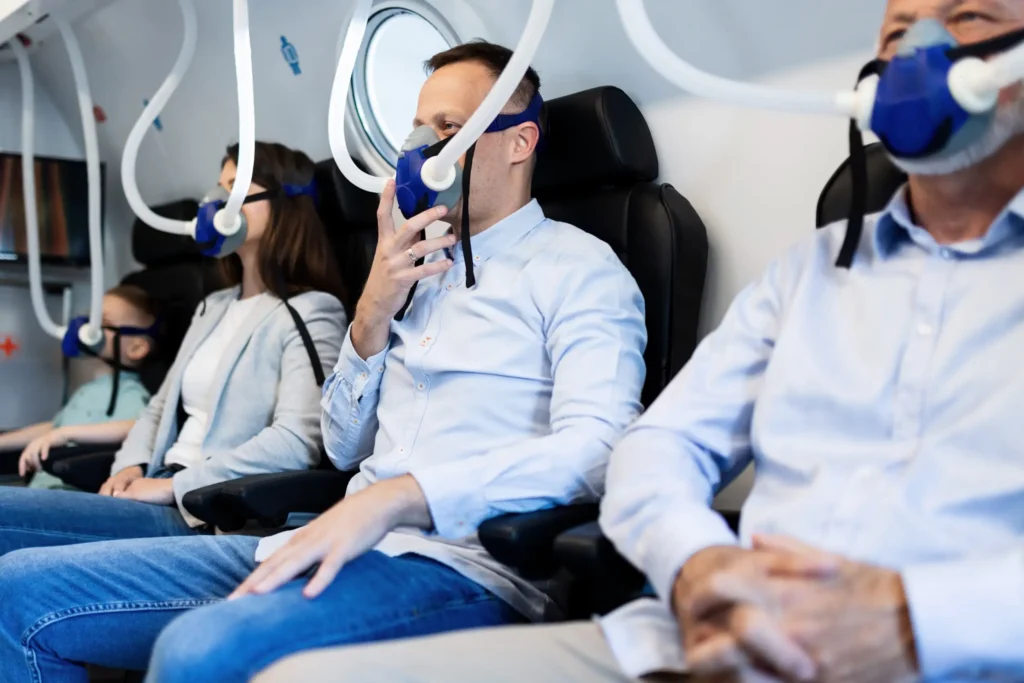
Next, the patient breathes close to 100% medical oxygen, compared with just 21% in room air. That oxygen arrives in one of two ways. In some chambers, the whole space fills with oxygen. In others, however, the chamber fills with air, and the patient breathes oxygen through a hood or mask. Many multiplace chambers also use a built-in breathing system, or BIBS, for this.
Step 3: Treatment at pressure
The patient then stays at treatment pressure for the session, and this is where the real work happens:
- More dissolved oxygen: Normally, red blood cells carry most of your oxygen. But under pressure, oxygen also dissolves straight into blood plasma, body fluids and tissues. So it can reach areas with poor blood flow.
- Smaller gas bubbles: Boyle’s law says a gas bubble shrinks as pressure rises. So in decompression sickness or gas embolism, the pressure shrinks trapped bubbles, which helps the body absorb and clear them safely.
- Healing over time: Across repeated sessions, this extra oxygen also drives the healing effects described below, such as new blood vessel growth and infection control.
Meanwhile, staff watch the pressure, the oxygen supply and the patient the whole time.
Step 4: Decompression
Finally, the operator brings the pressure back down slowly. Then the door opens, and the session ends.
Why Pressure and Oxygen Work Together
So here’s the core science behind how a hyperbaric chamber works. Normally, red blood cells carry almost all of the oxygen in your blood. Only a tiny amount, then, dissolves in the liquid part of blood, called plasma.
However, Henry’s law says more gas dissolves in a liquid as its pressure rises. So when you breathe pure oxygen at higher pressure, much more oxygen dissolves straight into your plasma. For instance, plasma holds about 0.003 mL of oxygen per deciliter for every mmHg of oxygen pressure. So at 3.0 ATA on oxygen, that can add up to roughly 6 mL per deciliter. In fact, that’s close to what resting tissue uses.
As a result, this dissolved oxygen can reach tissue that red blood cells struggle to reach, such as areas with poor blood flow.
What Happens in the Body During HBOT?
Research reviews also describe several effects of HBOT. For example, a 2021 review in the journal Medicina by Ortega and colleagues lists these:
- More tissue oxygen: First, plasma carries extra oxygen into tissue with poor blood flow.
- New blood vessels: Then, over many sessions, the body can grow new small vessels, a process called angiogenesis.
- Wound repair: Oxygen also supports the cells that build collagen and close wounds.
- Infection control: Higher oxygen helps white blood cells kill bacteria, too.
- Smaller gas bubbles: Finally, pressure shrinks gas bubbles in the blood, which matters for decompression sickness and gas embolism.
Together, these effects explain why HBOT helps some conditions. Still, it isn’t a cure-all, and a doctor decides when it fits.
How Much Pressure Does a Hyperbaric Chamber Use?
Hyperbaric chamber pressure uses ATA, or atmospheres absolute, where sea level is 1.0 ATA.
Pressure | Gauge pressure | Depth equivalent | Typical use |
1.3 ATA | 4.4 psi | About 10 feet of seawater | Mild soft-shell chambers |
2.0 ATA | 14.7 psi | 33 feet of seawater | Common clinical HBOT |
3.0 ATA | 29.4 psi | 66 feet of seawater | Specific clinical protocols |
So clinical HBOT usually runs between 2.0 and 3.0 ATA, according to the UHMS. We also explain each level in depth in our guide to hyperbaric chamber pressure.
Types of Hyperbaric Chambers
Generally, there are two main types of hyperbaric chambers:
- Monoplace hyperbaric chamber: Treats one person. It’s often a clear acrylic tube filled with oxygen, though some, like our Althea 4200, seat the patient upright and use air with a hood or mask.
- Multiplace hyperbaric chamber: Treats two or more people at once. So it fills with air, while each patient breathes oxygen through a hood or mask. Also, a trained attendant can stay inside.
Chambers also differ by build. For example, hard-shell chambers can reach clinical pressures. Soft-shell chambers, by contrast, are inflatable fabric units that usually run near 1.3 ATA on air.
Inside a Medical Hyperbaric System: Key Parts
A modern hyperbaric chamber is more than a steel tube. So a full medical hyperbaric system usually includes:
- Pressure vessel: First, the shell, built to ASME PVHO-1.
- Doors and locks: Multiplace chambers often add an entry lock, so staff can come and go under pressure.
- Viewports: Acrylic windows, so staff can see inside.
- Breathing-gas systems: Oxygen supply, as well as BIBS hoods or masks.
- Chamber controls: Touchscreen or manual controls, so staff can manage pressure and gas.
- Pressure monitoring: Gauges and sensors that track pressure until the session ends.
- Environmental control: Cooling and airflow, since pressure changes heat and cool the air.
- Communications: Two-way voice contact, so staff can talk with the patient.
- Safety systems: Finally, relief valves, oxygen monitors, emergency decompression and, in multiplace chambers, fire suppression.
Fire safety is also a big part of chamber design, so we cover it in our guide to hyperbaric chamber fire safety and NFPA 99.
Planning to add a hyperbaric chamber to your program?
From one monoplace to a 14-seat multiplace, the right chamber depends on your patients and space, too. So explore our chamber lineup, then talk to our engineers about the right fit.
What Is a Hyperbaric Chamber Used For?
A hyperbaric chamber is used for Hyperbaric Oxygen Therapy (HBOT), where a person breathes 100% pure oxygen inside a pressurized room or tube. So far, the FDA has cleared hyperbaric chambers for 13 uses:
- Air or gas embolism
- Carbon monoxide poisoning
- Crush injury
- Decompression sickness
- Gas gangrene
- Severe anemia when a blood transfusion isn’t an option
- Severe or large burns
- Severe skin or bone infection
- Radiation injury
- Skin grafts or flaps at risk of dying
- Sudden, painless vision loss from blocked blood flow
- Sudden, complete hearing loss without pain
- Diabetic wounds that won’t heal
Decompression sickness and arterial gas embolism are the classic diving uses. We also explain them in our guide to decompression vs recompression chambers.
Some centers also offer HBOT for wellness or sports recovery. However, those aren’t FDA-cleared uses, and the FDA has warned against claims for things like cancer, autism and Alzheimer’s disease.
What Is a Hyperbaric Session Like?
Before the session, staff check you for items that could cause a fire. Then you’ll often wear cotton clothes the facility gives you, and you’ll also remove makeup, lotions and electronics.
Most clinical sessions last about 90 minutes to two hours, including the time to raise and lower the pressure. During that time, you can relax, sleep or watch a screen in some chambers. You’ll feel ear pressure early on, then very little after that.
A course of treatment, though, usually takes many sessions. For instance, diabetic foot wounds often need 20 to 40. So your doctor sets the plan, with medical supervision from start to finish.
Risks and Downsides of a Hyperbaric Chamber
HBOT is generally safe when trained staff follow treatment protocols. Still, there are some risks. For instance, a 2017 review by Heyboer and colleagues lists these:
- Ear barotrauma: The most common side effect, because pressure pushes on the middle ear.
- Sinus pain: Also from pressure changes.
- Short-term vision changes: Some people notice blurry vision after many sessions, but it usually fades.
- Oxygen toxicity: Rare, but it can cause seizures at high pressure.
- Claustrophobia: Some people feel closed in, especially in monoplace chambers.
Fire is also a serious risk in any oxygen-rich space, which is why codes and screening matter so much. So always use a facility with trained staff and proper equipment.
How Much Does a Hyperbaric Chamber Session Cost?
Costs also vary by setting. For example, clinic sessions often run $150 to $600, while hospital sessions can cost more. Insurance, including Medicare, may cover HBOT for listed conditions, but not for wellness use. Our guide to hyperbaric chamber cost breaks down both session and equipment costs.
Hyperbaric Chamber Fire Safety Checklist
So use this quick checklist for your site:
- Chambers built to ASME PVHO-1, with full papers on file, first of all.
- Then fire suppression and handlines on all Class A chambers.
- Also sprinkler, water mist or clean agent protection in the chamber room.
- A 2-A:10-B:C extinguisher in the room.
- Oxygen monitoring with alarms in Class A chambers.
- A named safety director or coordinator.
- Patient screening, cotton garments and grounding before each session.
- Written emergency steps, as well as regular drills.
- Finally, set tests of suppression, sensors and relief valves.
For more on planning the whole space, see our guide to starting a hyperbaric clinic.
Who Builds and Maintains Hyperbaric Chambers?
Of course, every chamber starts with an engineering team. At PCCI, we design, build, install and maintain hard-shell hyperbaric chambers, from one-person monoplaces to multiplace systems for up to 30 people. Also, every patient vessel we build follows ASME PVHO-1, and our clinical chambers carry FDA 510(k) clearance. Our multiplace chambers also include NFPA 99 fire suppression.
Frequently Asked Questions
What is the downside of a hyperbaric chamber?
The most common downside is ear pain from pressure changes, also known as barotrauma. Some people also get sinus pain, short-term vision changes or a closed-in feeling. Oxygen toxicity, however, is rare. Fire is a serious risk in any oxygen-rich chamber, so trained staff and strict screening are essential every time.
How much is one hour in a hyperbaric chamber?
Prices vary by setting, so check locally. Many clinics charge about $150 to $600 per session, and most clinical sessions last 90 minutes to two hours. Hospital sessions can also cost more. Insurance may cover HBOT for FDA-cleared conditions, while wellness sessions are usually self-pay.
Do you wear clothes in a hyperbaric chamber?
Yes. Most facilities give you cotton clothes, because cotton lowers the risk of static sparks. You’ll also remove makeup, lotions, hair products, jewelry and electronics before you go in. Together, these steps help keep fire risk low in an oxygen-rich space, so staff check them before each session.
How long can a person stay in a hyperbaric chamber?
Most clinical HBOT sessions last about 90 minutes to two hours. But some treatments run longer. For example, the US Navy’s main table for decompression sickness lasts about 4 hours and 45 minutes. So your treatment team sets the time based on your condition.
How often should you use a hyperbaric chamber?
It depends on the condition, since emergencies like carbon monoxide poisoning may need only a few sessions. Chronic problems, on the other hand, like diabetic foot wounds, often need 20 to 40 sessions over several weeks. So a doctor should set the schedule for each patient.