Quick answer: A hyperbaric chamber fire is rare but deadly, because extra oxygen and pressure make things burn faster and hotter. So NFPA 99, Chapter 14, sets the fire rules for each hyperbaric facility. It sorts chambers into Class A, B and C, and it also calls for fire suppression in multiplace chambers. It also limits what goes inside, controls powered gear, and calls for a trained safety director.
A hyperbaric chamber fire is one of the worst events in hyperbaric medicine, though it doesn’t happen often. But when it does, the people inside can’t simply walk out, and the fire can spread in seconds.
At PCCI Hyperbaric Systems, we design and build hard-shell chambers with fire safety built in. So this guide explains why these fires happen, what NFPA 99 asks for, and how good design and good habits keep them from starting.
Why a Hyperbaric Chamber Fire Is So Dangerous
Every fire needs three things: fuel, heat and oxygen. But in a hyperbaric chamber, one of those is pushed far past normal. As a result, the whole fire triangle tilts toward ignition.
Oxygen makes everything burn faster
Oxygen doesn’t burn by itself, but it feeds fire. So in an oxygen-enriched environment, things catch more easily and burn hotter. In fact, the NFPA notes that some items, like silicone rubber, some lubes and even flame-resistant fabrics, won’t burn in normal air. Yet they can catch fire at the higher pressure and oxygen levels inside a chamber.
Pressure slows the way out
Also, people can’t just open the door. First, the chamber has to come back to room pressure. According to the NFPA, that should take no more than six minutes for Class A chambers and two minutes for Class B chambers, starting from three times normal pressure. That’s a long time during a fire.
What History Tells Us About Hyperbaric Chamber Fires
The data is sobering, but it also points to the fix. For instance, a 1997 UHMS study by Sheffield and Desautels looked at chamber fires from 1923 to 1996. It found 77 deaths in 35 hyperbaric chamber fires, plus two deaths in three hypobaric chamber fires.
But one finding stands out. In those hyperbaric chamber fires, the only survivors were in chambers filled with air at under 23.5% oxygen. So oxygen level, more than anything else, decided who lived.
The study also found that electrical sparks caused most chamber fires before 1980. Later, the worst single event came in Milan in October 1997, when a multiplace chamber fire killed 11 people.
Still, these fires haven’t stopped. In January 2025, for instance, a 5-year-old boy died in a hyperbaric oxygen chamber fire at a Michigan clinic. Then, in July 2025, a flash fire in a chamber killed a man in Arizona. Weeks later, the FDA sent a letter to health care providers about HBOT device safety, which stressed fire prevention.
What Is NFPA 99 Chapter 14?
NFPA 99 is the health care code from the National Fire Protection Association. Its Chapter 14 covers each hyperbaric facility, and hyperbaric chamber fire rules sit at its core. So it sets rules for the chamber, the room, power, gas, staff and emergency plans.
Chapter 14 also ties back to the vessel itself, because it says chambers must be built to ASME PVHO-1.
NFPA 99 chamber classes and fire risk
Next, NFPA 99 sorts chambers into three classes, and each one carries its own hyperbaric chamber fire rules:
Class | Who’s inside | Typical chamber gas | Built-in fire suppression |
Class A | More than one person | Air, with oxygen by hood or mask | Required |
Class B | One person | Often 100% oxygen | Not Required |
Class C | Animals only | Varies | Not Required |
The 23.5% oxygen line
First, NFPA 99 treats any air above 23.5% oxygen as oxygen-enriched. That’s why Class A chambers watch oxygen levels closely and alarm when they climb too high. It also explains the UHMS finding above: chambers kept below that line were the only ones with survivors.
NFPA 99 Fire Safety Requirements by Chamber Class
Class A multiplace chambers
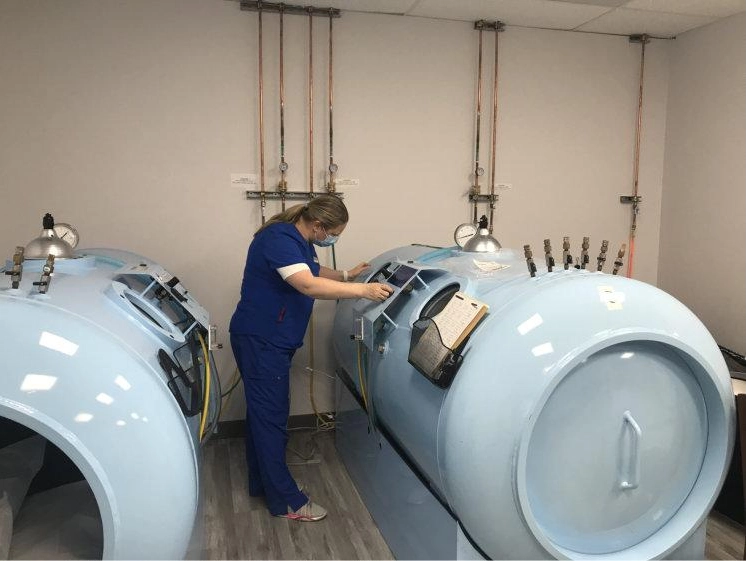
Multiplace chambers carry the strictest rules, because they hold the most people. So, according to the NFPA, they need a deluge sprinkler system in every part of the chamber where people sit. They also need a separately supplied handline inside the chamber. In addition, Class A chambers inside a building, along with their support gear, need two-hour fire-rated construction around them. And there must be a way to cut power to circuits that enter the chamber during a fire.
Class B monoplace chambers
Monoplace chambers, by contrast, don’t need deluge systems. That’s because the patient can get out faster, and the high oxygen level would let a fire burn too fast for a sprinkler to help. Instead, the NFPA recommends stopping the oxygen flow and following emergency decompression steps.
Class C animal chambers
Class C chambers hold animals only, so the rules focus on protecting staff and the building. Even so, good design still matters. For instance, our 1200E equine chamber includes a deluge system built to NFPA 99 Class C rules, plus fail-safe oxygen and no electrical parts inside.
The room around the chamber
Still, fire safety doesn’t stop at the chamber wall. Any room that houses a Class A, B or C chamber needs an automatic sprinkler, water mist or clean agent system. The NFPA also calls for a 2-A:10-B:C portable fire extinguisher in that room.
Ignition Sources and Combustible Materials
In practice, most hyperbaric chamber fire prevention comes down to keeping fuel and sparks out. So watch for these risks:
- Static electricity: So patients wear approved cotton garments, and staff ground the chamber and patient.
- Battery devices: Phones, watches, hearing aids and hand warmers can also spark or overheat.
- Cosmetics and hair products: Lotions, oils, makeup and hair spray add fuel, so patients remove them first.
- Lighters and matches: These are banned, of course.
- Unapproved materials: Even bedding and dressings need checks before use under pressure.
Before each session, staff check every patient and every item. Then the safety director decides what goes in, and can pull anything unsafe.
Electrical Safety in a Hyperbaric Facility
Faulty wiring caused most early hyperbaric chamber fires. So NFPA 99 limits what powered gear can go inside. Any device used in a chamber must also meet strict rules, like the hazard-zone rules in NFPA 70.
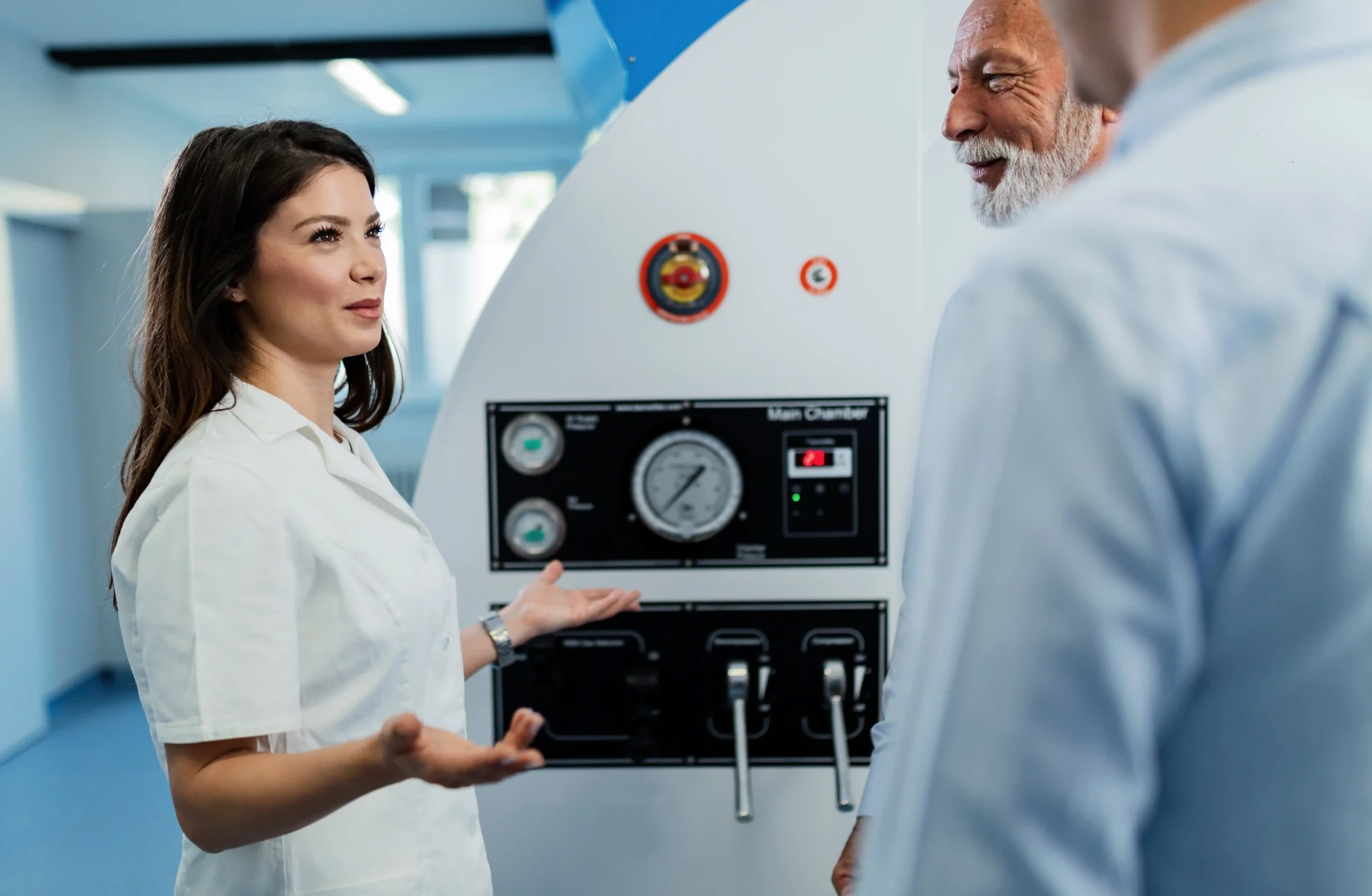
Good chamber design also keeps power outside where it can. For instance, our multiplace climate control uses a spark-safe motor that sits outside the chamber. Controls and monitors stay outside, too, with only approved parts passing through the wall.
Is your hyperbaric facility ready for a fire inspection?
Fire systems, oxygen monitors and grounding all age over time. So if your chambers have run for a while, our engineers can check your site and give you a clear list of fixes, in order.
How Chamber Design Reduces Fire Risk
Rules help, but design does much of the work before anyone steps inside. So here’s how we approach hyperbaric chamber fire risk:
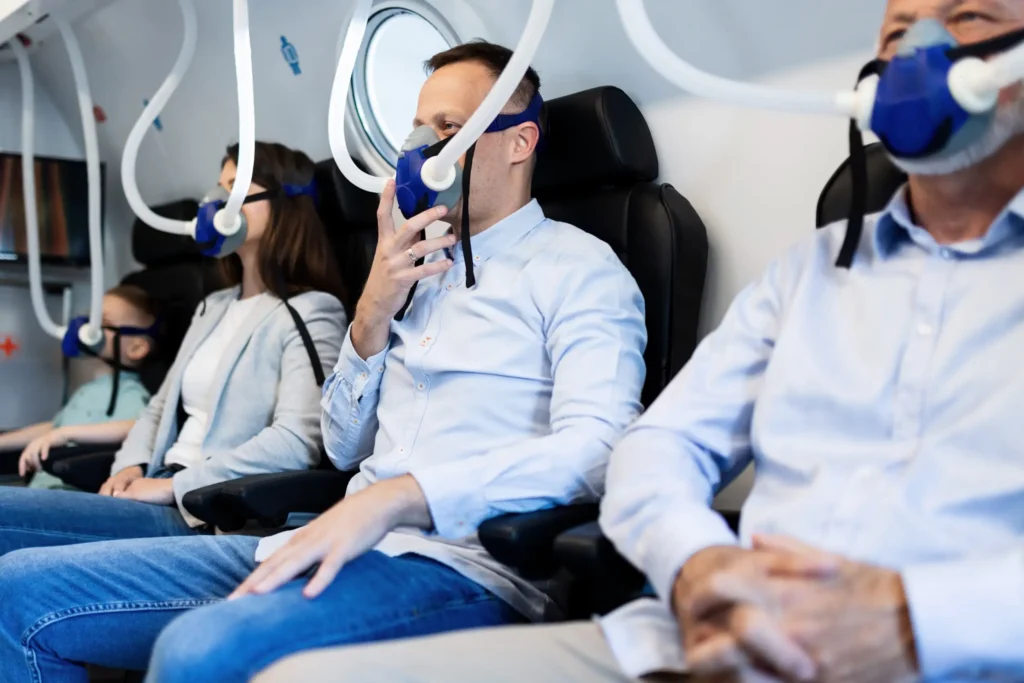
- Air-filled chambers: Our multiplace chambers and our Althea 4200 monoplace run on air, while patients breathe oxygen through a hood or mask. So the air inside stays close to normal.
- Built-in breathing systems (BIBS): Breathed-out oxygen leaves through the BIBS, so it doesn’t build up inside.
- Oxygen monitoring: Sensors track oxygen and sound an alarm before it gets too high.
- Fire suppression on every multiplace: Also, all our multiplace chambers include NFPA 99 fire suppression.
- Clean water for deluge: We build these systems without bare carbon steel, so the water stays clean enough to drink.
- PVHO-1 materials: Finally, each patient vessel follows ASME PVHO-1, which controls materials, windows and piping.
Emergency Procedures During a Hyperbaric Chamber Fire
Fast, practiced action saves lives during a hyperbaric chamber fire. While each site writes its own plan, the core steps often look like this:
- Stop the oxygen. First, cut the oxygen supply to the chamber or the hoods.
- Fight the fire. Then, in a Class A chamber, start the deluge and use the handline.
- Decompress. Then bring the chamber down to room pressure as fast as safely possible.
- Evacuate. Next, get everyone out and away from the room.
- Call for help. Finally, alert the fire department and follow the building’s fire plan.
NFPA 99 also calls for regular drills, so these steps become second nature.
Staff Roles, Training and Inspection
First, NFPA 99 says each hyperbaric facility must name a safety director. The 2024 code, though, calls this role the safety coordinator. So this person owns fire safety each day, from what goes in to the upkeep logs.
In August 2025, the FDA also reminded providers to:
- Follow each device’s instructions, first of all.
- Use fire prevention and grounding steps, too.
- Have trained staff watch patients until each session ends.
- Clean and check equipment as the maker directs, since upkeep prevents faults.
- Ban unsafe items and require static-safe clothing, such as cotton.
- Finally, report problems through the FDA’s MedWatch program.
Fire systems, oxygen sensors and relief valves also need regular tests. Meanwhile, ASME PVHO-2 guides checks of the chamber itself.
The Fire Risk Gap in Soft-Shell and Home Chambers
However, not every chamber is built or run to these rules. Soft-shell chambers are FDA-cleared to run on air only, yet many get paired with oxygen concentrators. So that adds oxygen inside a fabric chamber with no fire suppression. In 2024, for example, the Des Moines Fire Department ordered a soft-sided chamber out of a commercial building over code concerns. We also compare both chamber types in our guide to hard shell vs soft shell hyperbaric chambers.
Hyperbaric Chamber Fire Safety Checklist
So use this quick checklist for your site:
- Chambers built to ASME PVHO-1, with full papers on file, first of all.
- Then fire suppression and handlines on all Class A chambers.
- Also sprinkler, water mist or clean agent protection in the chamber room.
- A 2-A:10-B:C extinguisher in the room.
- Oxygen monitoring with alarms in Class A chambers.
- A named safety director or coordinator.
- Patient screening, cotton garments and grounding before each session.
- Written emergency steps, as well as regular drills.
- Finally, set tests of suppression, sensors and relief valves.
For more on planning the whole space, see our guide to starting a hyperbaric clinic.
How PCCI Builds for Fire Safety
We design, build and service hard-shell chambers only. So every patient vessel follows ASME PVHO-1, and every multiplace chamber includes NFPA 99 fire suppression. Also, our division head, Ramesh Dixit, PE, serves on NFPA, ASME PVHO and UHMS safety committees. So the codes we build to are codes we help shape.
Frequently Asked Questions
Are hyperbaric chambers a fire hazard?
They can be, because extra oxygen and pressure make fires start and spread faster. However, fires are rare when facilities follow NFPA 99, use chambers built to ASME PVHO-1, and screen every patient. In fact, chambers kept near normal air, under 23.5% oxygen, were the only ones with survivors in past hyperbaric chamber fires.
What does NFPA 99 apply to?
NFPA 99 is the Health Care Facilities Code. So its Chapter 14 covers each hyperbaric facility, including the chamber, the room, power, gas, staff and emergency plans. It also applies to Class A multiplace, Class B monoplace and Class C animal chambers, and it requires chambers to be built to ASME PVHO-1.
What causes hyperbaric chamber fires?
Most hyperbaric chamber fires start when a spark or heat source meets fuel in an oxygen-rich space. Early fires were mostly electrical. But other common causes include static, battery devices, hand warmers, and makeup or oils. That’s why staff check patients and limit what goes inside.
Do monoplace chambers have fire suppression?
Monoplace, or Class B, chambers don’t need built-in deluge systems under NFPA 99, because a fire burns too fast at such high oxygen levels. Instead, staff stop the oxygen flow and follow emergency decompression steps. But the room around a monoplace still needs sprinklers, water mist or clean agent, plus a fire extinguisher.
Can burn victims be treated in a hyperbaric chamber?
Yes, because severe burns are among the FDA-cleared uses for hyperbaric oxygen therapy. Still, a doctor decides if HBOT fits each patient. And the same fire rules apply, so staff check dressings before they go into the chamber. The number of sessions also varies with each injury.
Make Fire Safety Part of Your Chamber From Day One
A hyperbaric chamber fire is preventable when design, code and daily habits line up. So whether you’re planning a new site or checking an older one, our engineers can help. Schedule a facility evaluation, and we’ll show you where you stand.