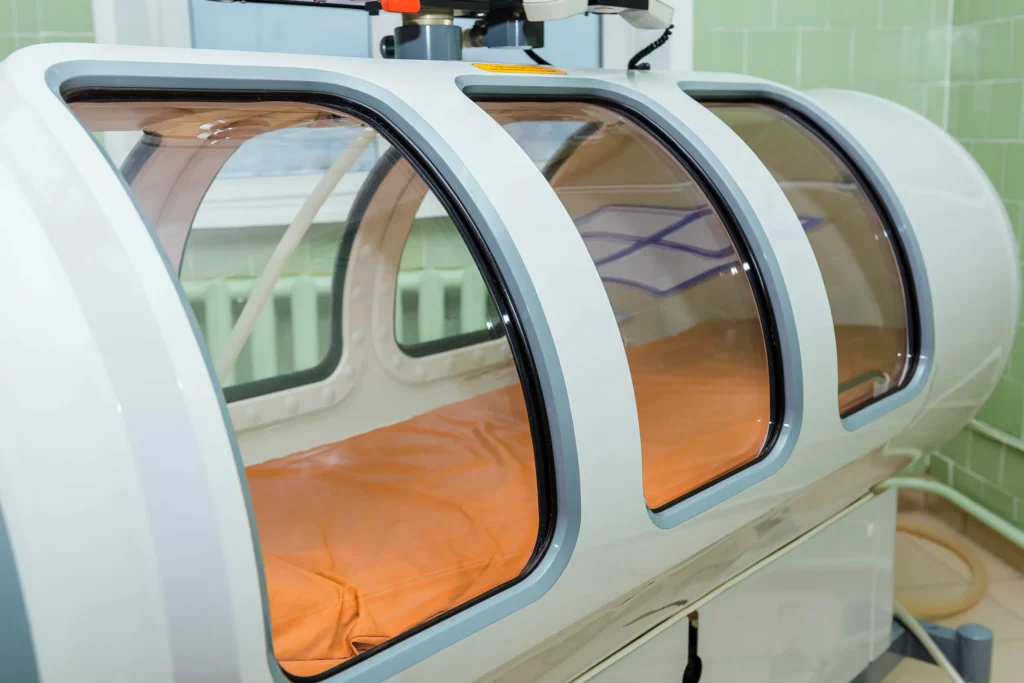

Quick answer: Hyperbaric chamber cost starts around $4,000 for an inflatable soft shell and can top $2 million for a hospital multiplace system. In between, personal hard shell units run about $15,000 to $50,000, while clinical monoplace chambers rated 2.0 to 3.0 ATA cost $80,000 to $250,000. If you’d rather pay per visit, clinic sessions usually cost $150 to $600, and most courses need 20 to 40 sessions.
When it comes to buying any hyperbaric chamber system, pricing play a major role. In a market you’ll got different quote from every different manufacturer and supplier. Before comparing prices, it is important to understand the key factors that can affect the overall cost and should not be overlooked.
However, hyperbaric chamber cost depends on four crucial factors more than any brand:
- The Operating pressure the chamber is built for
- Shell construction & Certifications
- Capacity like how many people it holds
- Chamber Oxygen Delivery
A 1.3 ATA fabric chamber for home use and a 6 ATA multiplace vessel for a hospital are different classes of equipment. So their prices sit far apart.
We build hard shell chambers at PCCI Hyperbaric Systems, so we see this confusion all the time. Since every clinical system we deliver is built for one specific site, we don’t publish a single hyperbaric chamber cost. Instead, we’ll show you the ranges buyers actually run into, what moves a price up or down, and the costs that usually catch people off guard.
Hyperbaric Chamber Cost by Type
Key factors shape the price far more than any brand name. First, there’s the pressure the chamber is built for. Second, there’s how many people it holds. And finally, there’s whether it counts as a medical device at all.
Chamber type | Typical price range (USD) | Pressure & breathing gas | Typical buyer |
Soft shell (mild) | $4,000 to $20,000 | 1.3 to 1.5 ATA; room air, often with an oxygen concentrator | Home and wellness users |
Personal hard shell | $15,000 to $50,000 | 1.5 to 2.0 ATA; rigid steel or acrylic shell | Home users, private wellness studios |
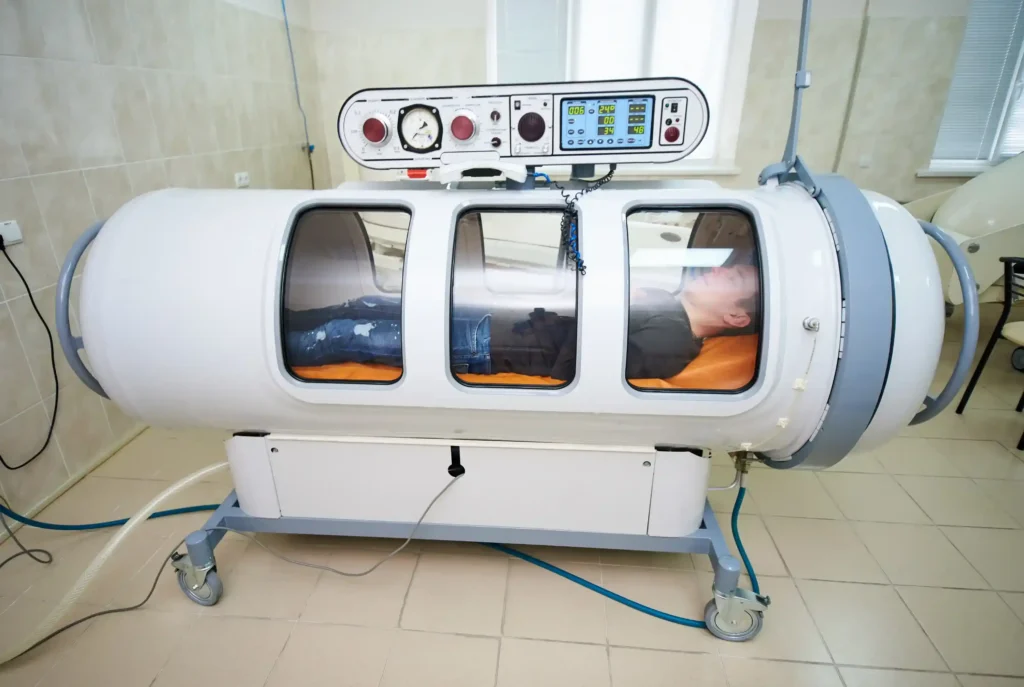
Clinical monoplace | $80,000 to $250,000 | 2.0 to 3.0 ATA; near 100% medical oxygen | Hospitals, wound clinics |
Commercial multiplace | $500,000 to $2 million+ | 2.0 to 3.0 ATA treatment, vessels rated higher; oxygen by hood or mask | Hospitals, military, large wound centers |
Keep in mind, though, that these numbers come from public listings and price guides as of October 2026. Also, they cover the chamber alone.
So why such a huge spread? Mostly, it comes down to regulation, because the FDA clears soft shells for just one use: acute mountain sickness. Clinical hard shells, on the other hand, are cleared for 13 medical uses. On top of that, they have to meet ASME PVHO-1 for the vessel and NFPA 99 Chapter 14 for fire safety. As a result, a big chunk of hyperbaric chamber cost goes into engineering, testing and paperwork that a fabric bag never needs.
Monoplace Hyperbaric Chamber Cost
Is a pre-owned monoplace cheaper?
Multiplace Hyperbaric Chamber Cost
Multiplace hyperbaric chamber cost starts around $500,000, and big systems can pass $2 million. In these chambers, patients sit in a room filled with air while they breathe oxygen through built-in breathing systems (BIBS). Meanwhile, an attendant can stay inside with them.
Our baseline multiplace models show just how wide the range gets. At the small end, the 8406-D is a dual-lock, 7 ft cylinder for 6 patients. At the other end, the 12000-T has three locks, a 10 ft diameter and seats for 14. However, we customize every system, so two “12-person” chambers can still carry very different prices.
Cost per seat: the number hospitals compare
Honestly, sticker price alone can mislead you on hyperbaric chamber cost. Let’s say a clinical monoplace costs $165,000, which is the midpoint of the market range. In that case, you pay $165,000 for one seat. Now take a 12-patient multiplace at $1.25 million. Then each seat suddenly costs about $104,000.
System | Illustrative price | Patients per treatment | Capital cost per seat |
Clinical monoplace | $165,000 | 1 | $165,000 |
12-patient multiplace | $1,250,000 | 12 | About $104,000 |
Of course, treat these hyperbaric chamber cost figures as planning examples, not quotes. Still, the pattern holds up. So once a program needs several chairs, a multiplace often wins on cost per seat. It also lets staff care for critical patients from inside the chamber, which a monoplace can’t do.

What Drives Hyperbaric Oxygen Chamber Cost
Generally, the same handful of features pushes hyperbaric oxygen chamber cost up or down in every clinical tier:
- Pressure rating: Higher working pressure needs thicker walls and bigger seals, so testing takes longer too.
- Number of locks: Extra locks cost more because they let staff move people in and out mid-treatment.
- Shape and size: Rectangular chambers feel roomier. However, flat walls need more steel than a cylinder.
- Fire suppression: NFPA 99 requires it in every multiplace, so it’s never optional there.
- Controls: Touchscreen systems with manual backup add cost, but they also make daily operation simpler.
- Comfort: Climate control and sound attenuation matter because treatments often run 90 to 120 minutes.
- Critical care options: Ventilators, suction, monitoring and ADA seating come as add-ons, so each one changes the quote.
- Regulatory work: FDA 510(k) clearance, code documents and engineer review also sit inside the price.
Cost per seat: the number hospitals compare
Honestly, sticker price alone can mislead you on hyperbaric chamber cost. Let’s say a clinical monoplace costs $165,000, which is the midpoint of the market range. In that case, you pay $165,000 for one seat. Now take a 12-patient multiplace at $1.25 million. Then each seat suddenly costs about $104,000.
System | Illustrative price | Patients per treatment | Capital cost per seat |
Clinical monoplace | $165,000 | 1 | $165,000 |
12-patient multiplace | $1,250,000 | 12 | About $104,000 |
Of course, treat these hyperbaric chamber cost figures as planning examples, not quotes. Still, the pattern holds up. So once a program needs several chairs, a multiplace often wins on cost per seat. It also lets staff care for critical patients from inside the chamber, which a monoplace can’t do.
Want a real number for your program?
When you tell us your site, capacity and timeline, our engineers will scope the chamber, the room and the gas supply together.
Hidden Costs Beyond the Hyperbaric Chamber Price
The chamber is often not the biggest line in a clinical budget. Plan for these as well:
- Facility build-out. Floor loading, ceiling height, ventilation, electrical service and room layout all need design work. For multiplace chambers, the building usually has to be planned around the vessel.
- Gas supply. Clinical chambers need a medical oxygen supply, and multiplace systems also need a medical-grade air plant.
- Fire protection. Multiplace chambers carry NFPA 99 fire suppression, which needs its own water supply and testing.
- Permits and inspections. Local building and fire officials review hyperbaric installations, and timelines vary by city.
- Delivery, rigging and commissioning. Large vessels may need cranes, removable walls or wide door openings.
- Training. Operators need hands-on instruction in controls, gas supply, safety checks and emergency response. Our installation and operator training covers these on site, with manuals.
- Maintenance. Plan for preventive service, seal and viewport replacement, and emergency repair. We offer single or multi-year preventative and corrective maintenance plans, but our chambers carry no mandatory service contract.
Oxygen as an operating cost
Oxygen use differs by chamber design. An oxygen-filled monoplace uses oxygen to pressurize and ventilate the whole vessel. An air-pressurized chamber sends oxygen only to the patient’s hood or mask. Over thousands of treatments, that difference shows up on the gas bill. This is also why we offer a ventilation package that converts oxygen-ventilated monoplaces to air.
Extra costs for home units
Hyperbaric Chamber Therapy Cost per Session
But maybe you don’t want to buy a chamber at all. In that case, hyperbaric chamber therapy cost depends mostly on where you go:
Setting | Typical cost per session | What you usually get |
Soft shell, wellness center | About $50 to $150 | 1.3 to 1.5 ATA, air or concentrator oxygen |
Freestanding hard shell clinic | About $150 to $600 | 2.0+ ATA, medical oxygen, physician oversight |
Hospital outpatient department | $200 to $1,250 or more | 2.0 to 3.0 ATA, billed with facility and physician codes |

Hyperbaric Chamber Treatment Cost for a Full Course
One session rarely fixes anything. That’s why total hyperbaric chamber treatment cost depends on the plan your physician sets. Specifically, at $150 to $600 a session, here’s roughly how common courses add up.
Carbon monoxide poisoning often needs only 1 to 3 sessions, so the total runs about $150 to $1,800. A non-healing diabetic foot wound, by contrast, usually takes 20 to 40 sessions, which comes to $3,000 to $24,000. Delayed radiation injury can take even longer, often 30 to 60 sessions, so expect $4,500 to $36,000.
Condition | Typical number of sessions | Course cost at $150 to $600 |
Carbon monoxide poisoning | 1 to 3 | $150 to $1,800 |
Non-healing diabetic foot wound | 20 to 40 | $3,000 to $24,000 |
Delayed radiation injury | 30 to 60 | $4,500 to $36,000 |
Does insurance cover hyperbaric oxygen therapy?
Yes, but only for certain conditions. Medicare covers hyperbaric oxygen therapy for the conditions listed in National Coverage Determination 20.29, such as diabetic foot wounds that haven’t healed with standard care. Many commercial plans also follow similar lists. In fact, for patients, that coverage changes the real hyperbaric chamber cost more than anything else. Even then, under Medicare Part B, you’d usually still pay 20% coinsurance after the deductible.
On the flip side, plans generally won’t cover wellness, anti-aging or athletic recovery, and none of those are FDA-cleared uses. So for hospitals and wound care clinics, choosing a chamber is also a revenue decision. After all, payers generally want treatment in a full-body chamber at clinical pressure before they’ll reimburse it.
How Lifespan Changes the Real Hyperbaric Chamber Cost
Unlike a soft shell, a hard shell chamber is a long-term asset. With routine maintenance and ASME PVHO-2 inspections, many chambers stay in service for 30 years or more. For example, the acrylic windows on our Althea 4200 have an estimated 20-year service life.
That long life also changes the math on hyperbaric chamber cost. When you spread the price over decades of daily treatments, the capital cost per session gets small next to staffing and oxygen. Better still, older chambers can often be updated instead of replaced. For instance, our facility upgrades and evaluations cover new controls, viewport and seal restoration, and full overhauls.
Soft shells, however, don’t have that path. That’s because no standard sets an inspection schedule or service life for their fabric, seams and zippers. So before you buy one, ask exactly what the warranty covers.
For home buyers, the break-even math is simpler. For example, a $10,000 unit used 200 times works out to $50 a session. Even so, remember that a home soft shell doesn’t deliver the same treatment as a clinical session at 2.0 ATA on medical oxygen.
Frequently Asked Questions
How much does a hyperbaric chamber cost?
A soft shell usually costs $4,000 to $20,000, while a personal hard shell runs $15,000 to $50,000. Clinical monoplace chambers generally cost $80,000 to $250,000. Multiplace systems, meanwhile, start near $500,000 and can pass $2 million. Also, room prep, oxygen supply and installation come on top of these hyperbaric chamber cost figures.
How much does a hyperbaric oxygen therapy session cost?
Generally, most clinic sessions cost $150 to $600. However, hospital sessions can reach $200 to $1,250 or more, because facilities bill chamber time in 30-minute units plus a physician fee. Wellness centers with soft shells often charge less, but they run at lower pressure and don’t offer FDA-cleared treatment.
Does insurance pay for hyperbaric oxygen therapy?
Yes, for listed medical conditions. Medicare covers HBOT under National Coverage Determination 20.29 for problems like certain diabetic foot wounds and radiation injuries, and many private insurers follow similar rules. However, insurers generally don’t cover wellness, anti-aging or athletic recovery sessions, so those stay self-pay.
Why don’t manufacturers list multiplace hyperbaric chamber prices?
Because each multiplace system gets built for its own site, capacity, pressure and options. Lock count, fire suppression, controls and critical care features also change the price a lot. As a result, two chambers with the same number of seats can differ by hundreds of thousands of dollars, so engineers quote them one project at a time.
Is a used hyperbaric chamber worth buying?
It can be, as long as someone has inspected and recertified it to ASME PVHO-1 and NFPA 99. So ask for the inspection report, test records and warranty terms in writing. When it’s done properly, a recertified hard shell can keep running for many more years at a lower upfront cost than a new unit.