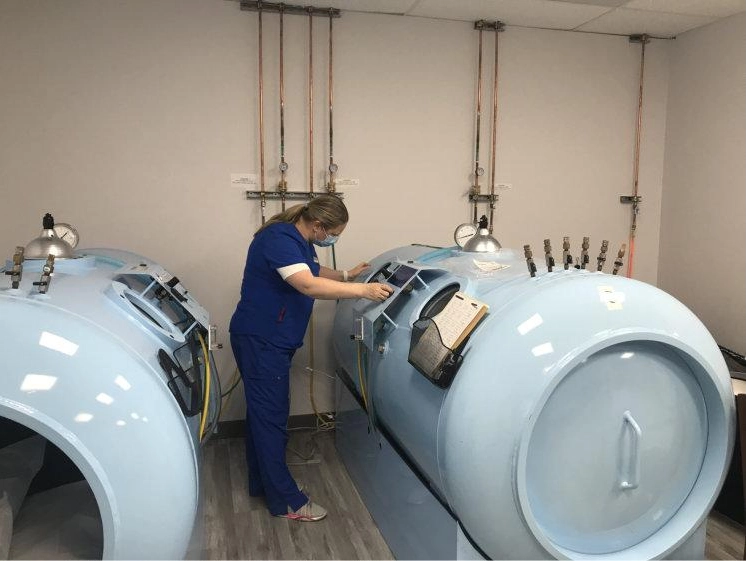

Quick answer: Caisson disease is decompression sickness (DCS), often called “the bends,” in people who work under compressed air in tunnels and caissons. While under pressure, the body absorbs extra nitrogen. So if a worker returns to normal pressure too fast, that nitrogen forms bubbles in the blood and tissues. Symptoms then range from joint pain to numbness and paralysis. Treatment, in turn, is recompression, usually with hyperbaric oxygen therapy.
Caisson disease has dogged tunnel and bridge crews since the 1800s. Back then, men dug in pressure boxes called caissons, and many came up in pain. Today, the name lives on, but it’s the same thing divers call decompression sickness.
At PCCI Hyperbaric Systems, we build tunnel man locks, medical locks, and saturation systems for compressed-air work. So this guide explains caisson disease in understandable words: what causes it, how to spot it, how it’s treated, and how tunnel teams prevent it.
What Is Caisson Disease?
Caisson disease is the name for decompression sickness in compressed-air workers. A caisson is a large, watertight box that’s pressurized so workers can dig water or soft ground below. Compressed air keeps water, mud and gases out, and it also helps support the ground.
What Is Decompression Sickness (DCS)?
Decompression sickness happens when gas dissolved in the body forms bubbles as pressure drops. Those bubbles can then block blood flow, irritate nerves and damage tissue. Doctors also split DCS into two types. First, Type I mainly affects joints, muscles and skin. Type II, on the other hand, affects the nervous system, lungs or inner ear, so it’s more serious.
Why Is It Also Called the Bends?
The nickname actually goes back to the Brooklyn Bridge workers of the 1870s. Some walked bent over in pain, a posture people compared to a fashionable stoop called the “Grecian bend.” Over time, “doing the bend” became “the bends.”
How Is Caisson Disease Related to Compressed-Air Work?
Caisson disease is simply DCS caused by compressed-air work, rather than diving. So today, that mostly means caisson work and pressurized tunnel construction, including tunnel boring machine (TBM) repairs at the cutting face. In short, any job that puts workers under raised ambient pressure carries the risk.
What Causes Caisson Disease in Tunnel Workers?
In a pressurized tunnel, every breath holds more gas than at the surface. So the blood and tissues slowly soak up extra nitrogen. Also, the longer the shift and the higher the pressure, the more nitrogen the body stores. This nitrogen uptake is harmless while the worker stays under pressure.
How Pressure Changes Can Cause Gas Bubbles to Form
The trouble starts when pressure drops. Back in 1878, French scientist Paul Bert showed that decompression sickness comes from nitrogen bubbles forming as pressure falls. Think of opening a soda bottle too fast: the gas rushes out as bubbles. The body does the same thing when it leaves pressure too quickly.
Why Rapid or Improper Decompression Increases the Risk
First, a slow, controlled decompression gives nitrogen time to leave through the lungs. But if decompression is rushed or cut short, the body can’t clear it fast enough. As a result, bubbles form in the blood, joints and nerves. For that reason, NIOSH warns tunnel workers never to shorten the decompression period.
Workplace Factors That Can Increase Decompression Risk
Several factors also raise the risk of caisson disease in tunnel construction:
- Higher pressure: More pressure means more nitrogen uptake, too.
- Longer shifts: Time under pressure also adds to the nitrogen load.
- Repeat exposures: More than one exposure a day needs special procedures, so OSHA puts the project doctor in charge of them.
- Hard physical work: Heavy effort can also change how gas moves through the body.
- Health and habits: NIOSH advises workers to be well rested, skip alcohol the night before, and take extra care when sick.
Tunnel crews may also face other risks, like silica dust and diesel fumes, according to a recent review of compressed-air workers.
What Are the Symptoms of Caisson Disease?
Caisson disease symptoms often start slowly. For example, according to the MSD Manual, about half of people with DCS notice symptoms within 1 hour, and 90% do within 6 hours. In rare cases, though, symptoms appear 24 to 48 hours later.
Early Symptoms: Joint Pain, Muscle Pain and Fatigue
Most often, the first sign is a deep, aching pain in or near a joint, such as the knee, shoulder, elbow, or hip. Workers may also feel unusual tiredness, muscle aches, itching or skin mottling.
Neurological Symptoms: Numbness, Weakness and Dizziness
When bubbles affect the spine or brain, symptoms get more serious. These then include numbness, tingling, muscle weakness, dizziness, and vertigo. Some people also notice ringing in the ears or trouble with bladder or bowel control.
Serious Symptoms: Breathing Difficulties and Loss of Coordination
The worst forms include shortness of breath, chest pain, and coughing, known as “the chokes.” Also, loss of balance, confusion, slurred speech, paralysis, and collapse are all emergencies.
When Should a Tunnel Worker Seek Emergency Medical Care?
Right away, for any symptom after leaving the pressure, because even mild joint pain can turn into something worse. In the US, for instance, OSHA requires each compressed-air worker to carry a badge that tells others to rush the wearer to the medical lock in an emergency. So workers should go to the medical lock, or call emergency services, rather than wait it out.
How Is Caisson Disease Diagnosed and Treated?
How Doctors Assess Suspected Decompression Sickness
However, there’s no single test for DCS. Instead, doctors look at the worker’s pressure exposure, the timing of symptoms, and a careful physical and neurological exam. They may also order tests to rule out other causes, like a heart or spine problem.
Why Prompt Medical Assessment Is Important
Time matters with decompression sickness, because bubbles can keep hurting nerves and tissue. So faster care often means a better recovery. For this reason, OSHA requires the medical lock to stay ready for at least 5 hours after any worker leaves the working chamber.
How Recompression Therapy Works
Recompression is still the main caisson disease treatment. First, the worker goes back under pressure in a medical lock or recompression chamber. That pressure shrinks the bubbles, following Boyle’s law. Then the pressure comes down slowly, so the extra nitrogen can leave safely. In other words, NIOSH describes it as recompression followed by a longer, slower decompression.
The Role of Hyperbaric Oxygen Therapy in Treatment
Hyperbaric treatment for decompression sickness goes one step further. In this case, the worker breathes close to 100% oxygen while under pressure. So that oxygen helps flush out nitrogen and feeds injured tissue. In fact, decompression sickness is one of the FDA’s cleared uses for hyperbaric oxygen therapy (HBOT). For example, a common protocol, US Navy Treatment Table 6, starts at about 2.8 ATA and runs roughly 4 hours and 45 minutes.
Recovery, Follow-Up and Potential Long-Term Complications
Many workers recover fully, especially with fast treatment. Some, however, need more than one session, and a few keep lasting nerve damage. Caisson work also carries a long-term risk called dysbaric osteonecrosis, where parts of a bone die from poor blood flow. It often shows up years later, sometimes with no earlier symptoms. For example, a Milwaukee tunnel job from 1971 to 1973, at pressures up to 36 psi, led to high rates of this bone damage, according to NIOSH.
How Can Tunnel Workers Prevent Caisson Disease?
Following Controlled Decompression Procedures
First, prevention starts with slow, controlled decompression in a man lock. Workers pass through the lock in stages, so pressure drops gradually. Because of this, nitrogen leaves the body without forming dangerous bubbles.
Using Appropriate Decompression Schedules and Procedures
Decompression tables set how long each stage lasts, based on pressure and time worked. In the US, OSHA has its own tables, and NIOSH later built interim tables for caisson and tunnel workers. Still, the NIOSH tables don’t cover pressures above 50 psi or special gas mixes. Many experts also like breathing oxygen during decompression. In fact, a 1997 paper by Kindwall called it the only workable way to safely decompress tunnel workers.
Worker Training and Health Monitoring
First, OSHA says a doctor must check every worker before they enter compressed air. Workers then get checked again after 10 days off or any illness, and at least once a year. Also, each shift’s decompression record goes to the project doctor, which supports pressure exposure monitoring.
Recognizing Symptoms and Reporting Them Early
Workers should also know the signs and speak up fast. NIOSH also advises:
- Never cut the decompression time short.
- Don’t sit or rest in a cramped position during or right after it.
- Skip hot showers for up to 6 hours after, too.
- And never treat the pain with alcohol.
Emergency Response Planning for Pressurized Worksites
Every pressurized worksite also needs a clear plan. So that includes a ready medical lock, a doctor on call, trained lock attendants, and a way to move a worker to treatment fast. Under OSHA, the medical lock must also have at least two compartments and enough headroom for a person to stand.
Planning a compressed-air tunnel project?
After all, the right man locks and medical locks help keep caisson disease from turning into an emergency. So talk to our engineers about lock systems built for your pressures, crew size, and site.
What Is the Role of Decompression Chambers in Tunnel Construction?
A decompression chamber is a pressure vessel that brings people back to normal pressure slowly and safely. So on tunnel jobs, the man lock does this every shift. NIOSH, for its part, describes it as the chamber that gradually returns workers to surface pressure.
How Decompression Chambers Support Pressurized Tunnel Operations
On a tunnel boring machine, however, workers often need to enter the pressurized area at the cutting face for repairs. So the machine carries a man lock, and the site often keeps a medical lock nearby. Our TBM man locks, for example, are dual-lock and rated up to 10 bar (147 psig). They also have built-in breathing systems for oxygen. We also build shuttle locks. These move workers under pressure between the machine and the surface.
Decompression Chambers vs. Recompression Chambers
The two can look alike, but they do different jobs. A decompression chamber handles routine, set decompression for healthy workers. A recompression chamber, by contrast, treats a worker who already has symptoms, with a doctor in charge. That’s the real difference between decompression and recompression chambers: one prevents injury, while the other treats it. For instance, our medical air lock is a dual-lock, FDA-cleared treatment chamber built into a shipping container and rated to 5 bar.
Why Chamber Selection Depends on the Worksite and Operational Requirements
Still, no single chamber fits every tunnel, since pressure, crew size, shift length, and space on the machine all shape the choice. In fact, deep projects may even need a saturation system, where crews live under pressure for days. Our saturation system, for example, holds 6 to 25 people at up to 18 bar. Tunnel chambers should also meet ASME PVHO-1, the safety standard for pressure vessels that hold people. In fact, OSHA applied it to TBM chambers in a 2010 interpretation.
Caisson Disease in History: Lessons from Major Tunnel Projects
Caisson Disease During the Brooklyn Bridge Construction
The Brooklyn Bridge, in particular, made caisson disease famous. In 1873, the bridge’s physician, Andrew Smith, described 110 serious cases, including three deaths. He also coined the term “caisson disease.” Even chief engineer Washington Roebling was struck down in 1872 and directed the work from his sickbed. Meanwhile, at the Eads Bridge in St. Louis, workers faced pressures up to 55 psig, with about 119 severe cases and 14 deaths.
How Early Tunnel Projects Improved Understanding of Decompression Sickness
Early tunnels also taught hard lessons. Once a recompression lock was added to a later tunnel project, deaths fell sharply. In fact, NIOSH notes that only 2 deaths occurred among 120 men over 15 months on that job. Over time, slower decompression, medical locks, and oxygen became standard tools.
Modern Approaches to Occupational Decompression Safety
Today, caisson disease is far less common, but it hasn’t gone away. So modern tunnel teams rely on tested tables, oxygen during decompression, health checks, well-built locks, and on-site treatment chambers.
Occupational Safety Standards for Compressed-Air Tunnel Work
In the US, OSHA 29 CFR 1926.803 covers compressed-air work. For example, it limits worker pressure to 50 psi except in emergencies. It also requires a medical lock whenever the working chamber is above normal pressure. Each shift’s decompression record then goes to the project physician.
Worker Medical Fitness, Training and Emergency Preparedness
OSHA also says a licensed doctor who knows compressed-air work must be on call while work goes on. Lock attendants then work under that doctor. And every worker carries an ID badge with the medical lock address and the doctor’s phone number.
Why Requirements Vary by Jurisdiction and Project
Rules also differ by country and state. For instance, Washington State requires workers to wear the ID badge on and off the job. Meanwhile, in Europe, EN 12110 sets safety rules for air locks on tunneling machines. So always check the rules that apply to your project.
Frequently Asked Questions
Is caisson disease the same as decompression sickness?
Yes, because caisson disease is decompression sickness in people who work under compressed air, such as tunnel and caisson workers. The cause is the same as in divers: nitrogen forms bubbles when pressure drops too fast. Only the setting differs, since it comes from tunnel or caisson work rather than diving.
Why are tunnel workers at risk of the bends?
Pressurized tunnels keep out water and soil with compressed air, so workers breathe air at higher pressure. Their bodies then absorb extra nitrogen. If decompression is rushed when they leave, that nitrogen can form bubbles, which cause the bends. Longer shifts and higher pressures raise the risk further.
How soon can symptoms appear after decompression?
Most symptoms start soon after leaving pressure. For example, about half of people with decompression sickness notice them within 1 hour, and 90% within 6 hours, according to the MSD Manual. In rare cases, however, symptoms appear 24 to 48 hours later, so workers should stay alert.
Can caisson disease cause permanent damage?
It can. Fast care often leads to a full recovery, but severe cases may leave lasting nerve damage or weakness. Compressed-air workers also face a long-term risk of dysbaric osteonecrosis. This bone damage can show up years later, sometimes with no earlier warning signs at all.
How is caisson disease treated?
The main caisson disease treatment is recompression in a medical lock or hyperbaric chamber. In most cases, the worker breathes close to 100% oxygen under pressure, which shrinks bubbles and clears nitrogen. A doctor directs the treatment, and some workers need more than one session to fully recover.
Can decompression chambers prevent caisson disease?
Yes, decompression chambers prevent caisson disease when used for controlled, gradual decompression. They help a lot, since man-locks let workers decompress slowly on a set schedule, which keeps nitrogen bubbles from forming. However, chambers only work alongside proper decompression tables, medical screening, and good habits. So prevention depends on the whole system, not just the equipment.