Quick answer: Starting a hyperbaric clinic takes three things that work as one: the right chamber, a room built around it, and the right sign-offs. First, pick monoplace or multiplace chambers that carry FDA 510(k) clearance and meet ASME PVHO-1. Then plan floor loading, ceiling height, power, ventilation and medical oxygen. Finally, secure building and fire permits, meet NFPA 99, and name a trained safety director.
Most people planning a hyperbaric clinic start with the chamber, and that’s natural. But it’s also the most common mistake. In practice, the room, the gas supply and the permits often take longer, and cost more, than the chamber itself.
At PCCI Hyperbaric Systems, we design, build and install hard-shell chambers. So we also help clinics plan the space around them, from first sketch to opening day. This guide walks through what we see on real jobs, step by step.
What It Takes to Open a Hyperbaric Clinic
In short, each hyperbaric oxygen therapy clinic rests on three pillars:
Pillar | What it covers |
Equipment | Chambers, medical gas delivery, BIBS, controls, monitoring, fire suppression |
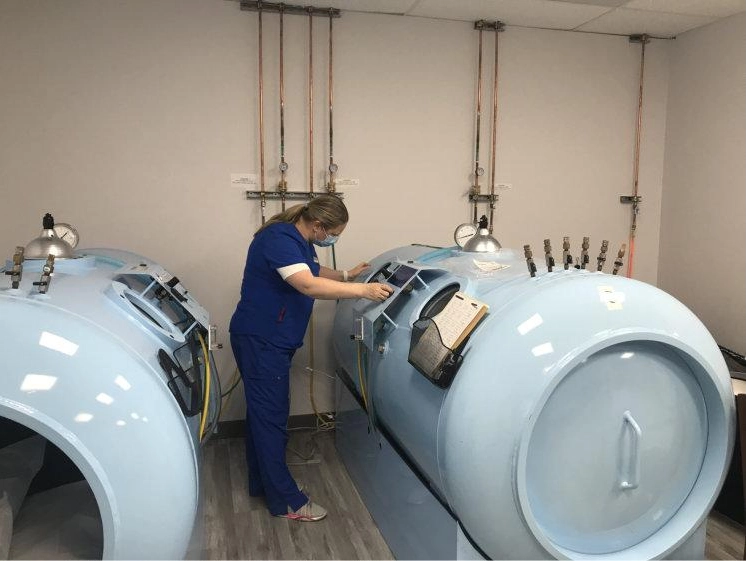
Space | Treatment room, footprint, access, power, ventilation, oxygen storage |
Permits and compliance | Licensing, building and fire permits, PVHO-1, NFPA 99, staffing |
Each pillar also shapes the others. For instance, the chamber you pick sets the room size, and the room then decides which permits you’ll need. So it pays to plan all three at once, not one after another.
Step 1: Define Your Hyperbaric Clinic Model
Before you price a chamber, decide what kind of hyperbaric clinic you’re opening. That’s because this choice drives almost all else.
Medical or wound care clinic
First, a medical hyperbaric oxygen therapy center treats FDA-cleared uses, like wounds that won’t heal and radiation injury. Since it bills insurance, it needs clinical chambers, a doctor in charge and good records. Medicare, for instance, covers HBOT under National Coverage Determination 20.29. Chamber time bills under HCPCS G0277, while the doctor’s time bills under CPT 99183.
Hospital-based department
Hospitals often add multiplace chambers, so they can treat urgent and critical care cases. They also tie the room into the hospital’s license, fire plan and gas lines.
Wellness or recovery center
Mobile clinic
Step 2: Choose the Right Equipment
Once your model is clear, pick gear that fits it. Here’s what a hyperbaric clinic needs.
Hyperbaric chambers: monoplace or multiplace
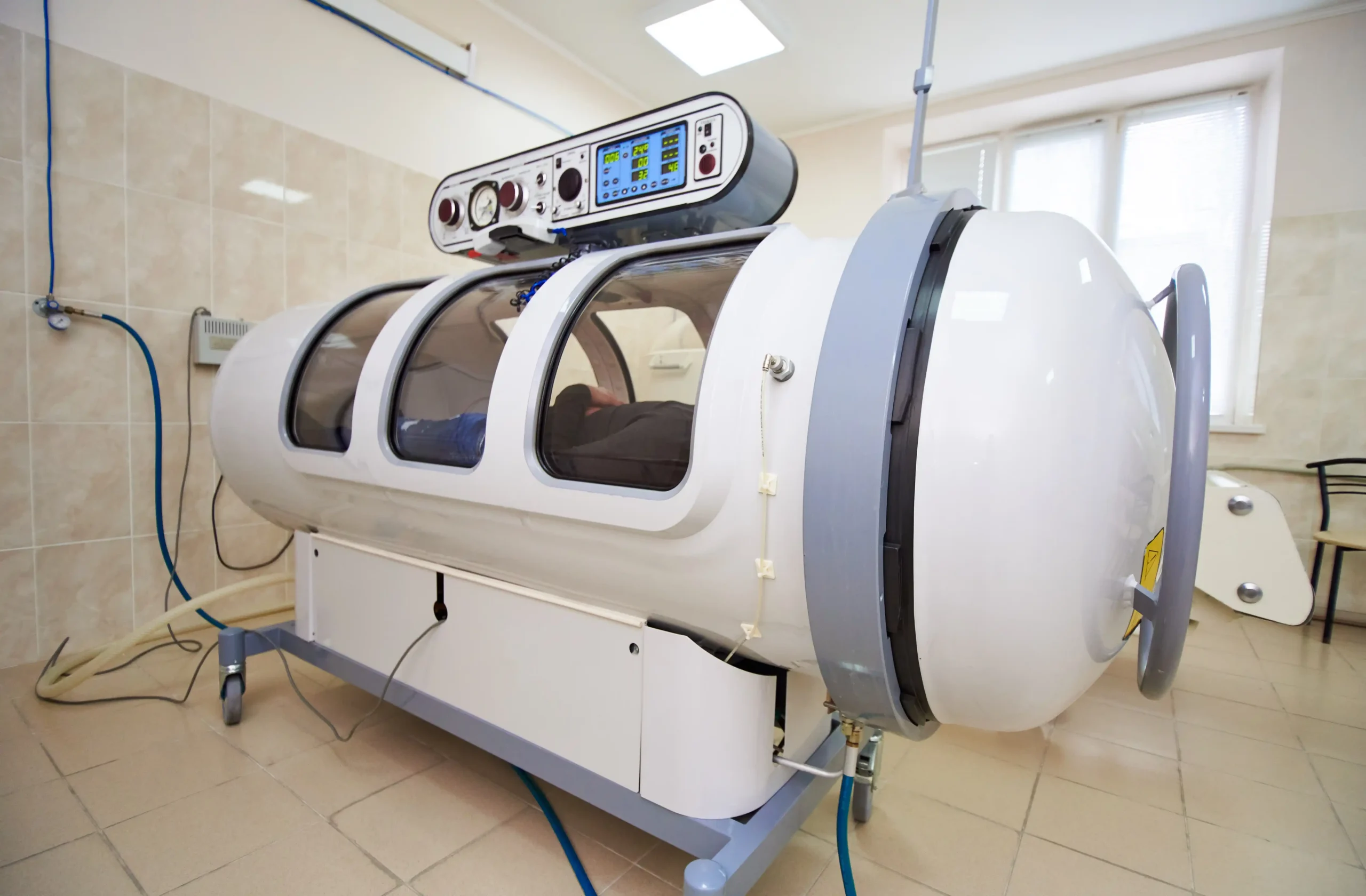
First, a monoplace chamber treats one patient at a time. So it suits most outpatient clinics with steady, stable patients. A multiplace chamber, by contrast, treats a group, with staff inside. So it suits hospitals, high volume and critical care. Also, our guide to types of hyperbaric chambers covers the full comparison.
Medical gas delivery and BIBS
Next, decide how oxygen reaches each patient. Some monoplaces fill with oxygen, while others, like our Althea 4200, run on air with oxygen by hood or mask. Multiplace chambers, by contrast, use a built-in breathing system (BIBS) for each seat. They also need a medical-grade air plant to pressurize the room.
Chamber controls, monitoring and communications
Then look for clear controls with manual backup. Also look for patient monitors and two-way voice contact. Our multiplace chambers, for instance, use touchscreen controls, full manual backup and a separate control desk.
Fire suppression and emergency systems
First, NFPA 99 calls for fire suppression in multiplace (Class A) chambers. It also calls for a way to cut power to in-chamber circuits in a Class A fire. Also, every chamber needs a safe way to drop pressure in an emergency.
Standards to ask about
Before you buy, ask for FDA 510(k) clearance for clinical use and full ASME PVHO-1 papers. Also check that it meets NFPA 99.
Step 3: Plan the Space for Your Hyperbaric Clinic
Still, the room is where many hyperbaric clinic projects stall. So plan it early, with your chamber maker, designer and builder at the same table.
Hyperbaric treatment room and chamber footprint
Start with the chamber’s footprint, then add the spacing your chamber maker lists for service and patient transfer. But sizes vary a lot. For instance, our Althea 4200 monoplace measures about 90 by 46 inches. Our largest baseline multiplace, on the other hand, is 38 feet long.
Ceiling height, doors and equipment access
Next, check every door, hall and turn on the delivery path. For instance, our Althea 4200 fits through a 48-inch doorway. A multiplace, though, may need a removable wall, a crane or a wide loading route.
Floor loading
Chambers are also heavy. Even one monoplace like ours weighs about 1,900 lb, so a structural engineer should check the floor. And multiplace chambers often need a stronger slab.
Electrical requirements
Then confirm the power each system needs. Our monoplace, for instance, runs on 110 or 220 VAC. Larger systems also need power for air pumps, cooling and controls. Also, NFPA 99 limits what electrical gear can go inside a chamber.
Ventilation and environmental control
Chambers release heat and gas, so the room needs good ventilation and temperature control. Oxygen-filled monoplaces also vent oxygen, which must leave the building safely.
Medical gas infrastructure
First, plan your oxygen supply early, whether that’s cylinders, liquid oxygen or a bulk system. Multiplace chambers also need medical-grade air. Also, pipe routes, alarms and shutoff valves all need code review.
Patient, staff and emergency areas
Finally, leave room for patient prep, changing, rest and a nurse station. You’ll also need staff space, storage and clear emergency access for stretchers and first responders.
Planning a hyperbaric clinic from the ground up?
The chamber, room, gas supply and permits all have to line up before opening day. Our engineers work with your designer and builder from the first drawing, so the space is ready when the chamber arrives.
Step 4: Permits, Licenses and Code Compliance
Still, there’s no single federal “hyperbaric clinic license” in the US. Instead, sign-offs come in layers, and they vary by state and city.
Healthcare facility licensing
Your state health office may ask for a clinic license, depending on your model and care. Some states also ask for a certificate of need for certain medical services. So call your state health office before you sign a lease.
Building permits and local codes
Most hyperbaric clinic build-outs also need a building permit. Then local building codes and NFPA 101, the Life Safety Code, shape exits, fire walls and occupancy rules. So your designer should know the chamber specs from day one.
Fire safety approval
The local fire marshal checks hyperbaric rooms closely, because oxygen feeds fire. So expect questions on NFPA 99, oxygen storage, grounding and fire suppression.
Pressure vessel requirements
First, NFPA 99 says chambers must be designed and built to ASME PVHO-1. Some states also write PVHO-1 into their boiler and pressure vessel rules. Hawaii, for instance, asks for PVHO-1 documents and allows registration with the National Board of Boiler and Pressure Vessel Inspectors.
Medical equipment requirements
The FDA also treats hyperbaric chambers as Class II medical devices. So a medical clinic should use chambers with 510(k) clearance for the uses it plans.
Accreditation and insurance
Accreditation is often a choice, but it helps. The UHMS runs one program, and some hospitals use The Joint Commission. You’ll also need liability and malpractice cover. And payers may ask if you’re accredited.
Step 5: Staffing, Training and Emergency Procedures
First, NFPA 99 says each hyperbaric site must name an on-site hyperbaric safety director. The 2024 edition, though, calls this role the hyperbaric safety coordinator. So this person runs gear safety, writes the rules and can pull unsafe items from the chamber.
Most clinics also build their team around a few roles:
- Medical director: A doctor who sets the plan and runs care, too.
- Safety director or coordinator: Most often a tech or nurse with safety training.
- Certified Hyperbaric Technologist (CHT): Then runs the chambers each day.
- Certified Hyperbaric Registered Nurse (CHRN): Also looks after each patient.
UHMS guidance also points safety directors to a 40-hour intro course in hyperbaric medicine, plus a safety director course. Also, NFPA 99 calls for regular emergency drills. And in August 2025, the FDA reminded providers to train staff, follow device instructions and keep gear in good shape.
Step 6: Installation, Inspection and Commissioning
When the room is ready, the chamber arrives. So a smooth hand-off often follows this order:
- Site readiness review: Confirm power, gas, structure and access before delivery.
- Delivery and rigging: Then move the chamber safely into place.
- System integration: Next, connect gas, power, controls and fire suppression.
- Commissioning: Then test pressure, alarms, voice links and emergency systems.
- Inspections: After that, local building and fire officials sign off.
- Training: Staff also learn controls, safety checks and emergency response on site.
- Documentation: Finally, keep the PVHO-1 papers, manuals and a PVHO-2 inspection plan on file.
Our install and training work covers each of these steps. And after that, our chambers need no set service contract.
Common Mistakes When Starting a Hyperbaric Clinic
Still, we see the same issues again and again:
- Buying the chamber first, before checking the room, floor or doorways.
- Skipping the fire marshal until the build is almost done.
- Skimping on oxygen supply, mostly for monoplaces filled with oxygen.
- Making medical claims for wellness uses, since they aren’t FDA-cleared.
- Forgetting the safety director, even though NFPA 99 calls for one.
- Ignoring the paperwork, like PVHO-1 data reports and window papers, too.
How Much Does It Cost to Start a Hyperbaric Clinic?
Of course, costs depend on your model, chamber type and site. As a rough guide, clinical monoplace chambers often run $80,000 to $250,000 each, while multiplace systems start around $500,000. Then add build-out, gas systems, permits, staffing and training. Our guide to hyperbaric chamber cost breaks these numbers down further.
How PCCI Helps You Open a Hyperbaric Clinic
We support a hyperbaric chamber business from the first sketch to the first patient. So that covers site design, turnkey chamber design and build, install and staff training, plus upkeep. Also, every patient vessel we build follows ASME PVHO-1, and our multiplace chambers include NFPA 99 fire suppression. Our clinical chambers also carry FDA 510(k) clearance.
Frequently Asked Questions
Do you need a license to open a hyperbaric clinic?
No, there’s no single federal hyperbaric license in the US. Instead, you may need a state facility license, a business license, building and fire permits, and in some states a certificate of need. Your chambers also need to meet FDA, ASME PVHO-1 and NFPA 99 rules, so check with your state health office first.
How much space does a hyperbaric clinic need?
It depends on your chambers and care, so sizes vary. For instance, a single monoplace like our Althea 4200 measures about 90 by 46 inches, plus service clearance. But you’ll also need room for patient prep, recovery, staff, storage, gas systems and emergency access. Also, a multiplace system can need a much larger, custom room.
Who can operate a hyperbaric chamber in a clinic?
Most often, trained staff run clinical chambers, with a doctor in charge. So many clinics hire certified hyperbaric techs (CHT) and nurses (CHRN). NFPA 99 also says each site must name a safety director. That’s often a CHT or CHRN with extra safety training.
Can a wellness center open a hyperbaric oxygen therapy clinic?
Yes, but the rules still apply. After all, fire codes, building permits and pressure vessel standards don’t change for cash-pay clinics. But wellness and athletic recovery aren’t FDA-cleared uses, so a wellness center should avoid medical claims and check its state’s licensing rules first.
How long does it take to open a hyperbaric clinic?
Generally, timelines vary with your site, permits and chamber type. A monoplace clinic in a ready space often moves faster, while a multiplace system needs more design, construction and inspection time. So starting site planning alongside the chamber order is the best way to avoid delays.
Ready to Plan Your Hyperbaric Clinic?
Opening a hyperbaric clinic goes faster when the chamber, the room and the permits move as one. So our engineers can help you plan the space, pick the right chambers and prepare for checks. Talk to our facility design team, and we’ll help you map out your project.