DESIGN • ENGINEER • MANUFACTURE • INSTALL • MAINTAIN
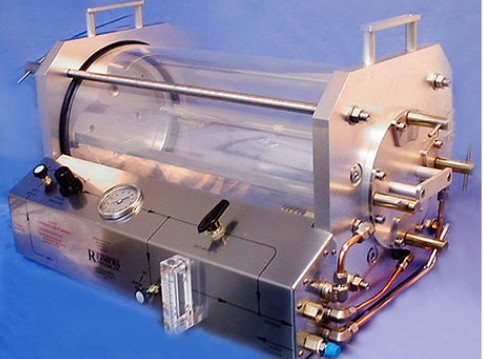
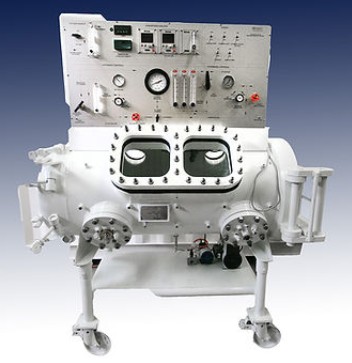
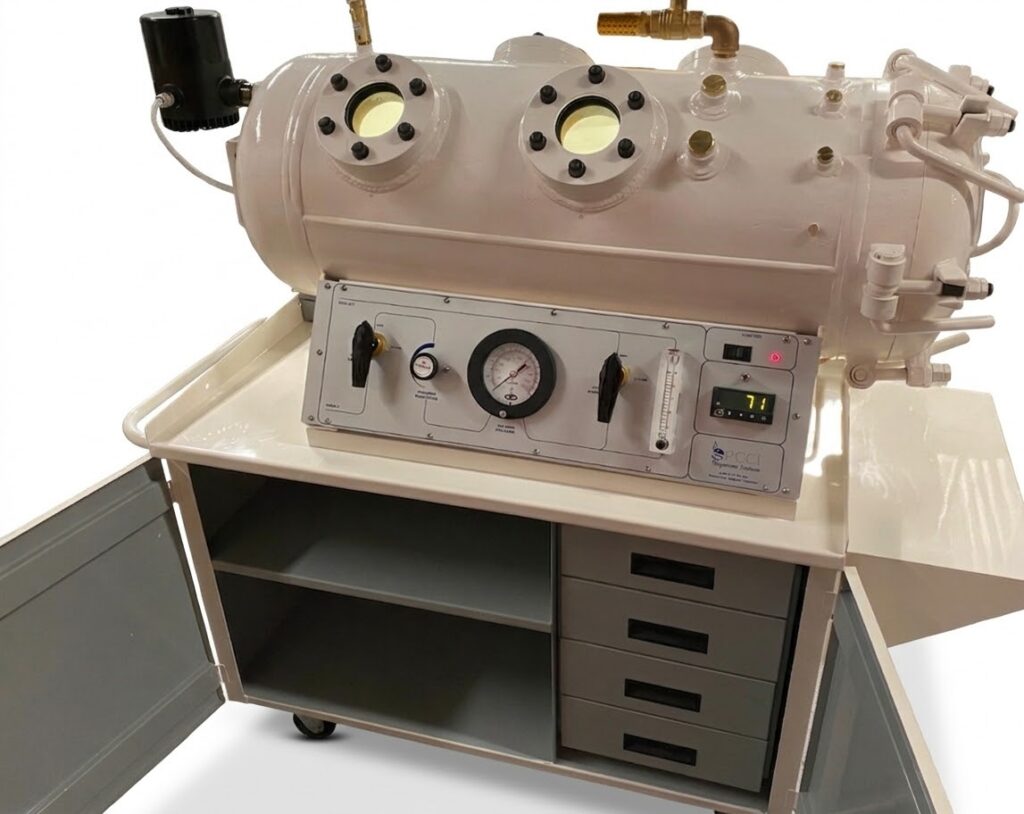
Advancing hyperbaric science at the preclinical level requires equipment that performs with the rigor and consistency to match your research. PCCI Research Chambers are purpose-built for university laboratories, pharmaceutical research institutions, veterinary medicine programs, and government research facilities — delivering the precision instrumentation, environmental control, and safety architecture that sophisticated investigators require.
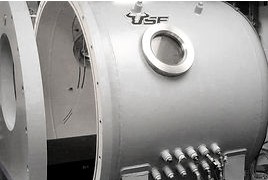
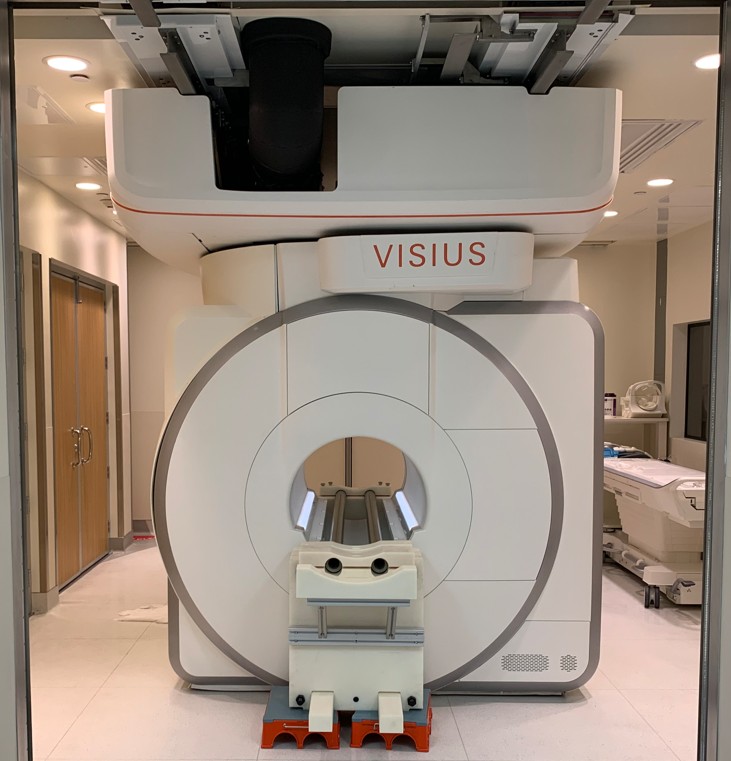
PCCI offers five baseline research chamber models spanning the full spectrum of preclinical subject sizes — from small rodents and aquatic species to large mammals — with advanced configurations available including integrated Atomic Force Microscopy and MRI compatibility. We can also customize a chamber to species, protocol, or facility requirement.
Five purpose-built configurations. Each available with custom options for your protocol.
Gerbils, Mice, Rats, Hamsters
22″
Guinea Pigs, Rabbits
Guinea Pigs, Rabbits, Small Dogs
Pigs, Dogs, Sheep
Fish
Humans, Animals <400 lbs
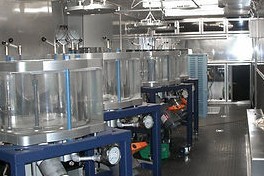
Available in configurations accommodating mice, rats, rabbits, guinea pigs, and larger subjects such as dogs and pigs. Compartmentalized systems allow multiple small animals to be treated simultaneously under identical pressure conditions — maximizing research efficiency without introducing inter-session variability. PCCI also offers a model for aquatic research on fish.
PLC-based automated pressure management delivers fully adjustable, repeatable pressure profiles across every session. Real-time monitoring and data logging of oxygen concentration, CO2, temperature, humidity, and chamber pressure supports peer-reviewed publication, IACUC compliance, and protocol validation.
Supports both air-pressurized BIBS oxygen delivery and full chamber oxygen pressurization — eliminating the masking challenge common in animal research while maintaining precise concentration control throughout every session.
Noise-attenuating systems, stable temperature and humidity control, and easily sanitized interiors reduce subject stress and inter-session variables — supporting both research integrity and IACUC compliance.
PCCI holds a patent for a hyperbaric chamber with fully integrated Atomic Force Microscopy (AFM) capability — one of the most advanced research tools available in hyperbaric science today. This exclusive system enables investigators to study the cellular and molecular effects of hyperbaric gases and pressure in real time, at subnanometre resolution, on living biological preparations — something no standard hyperbaric research chamber can offer.
Multi-layer safety architecture includes a deluge-based fire suppression system, automated pressure reduction upon suppression activation, high flow relief valves, and zero internal electrical equipment — minimizing ignition and fire risk.
Every PCCI research chamber system is custom-designed for your specific mission requirements.
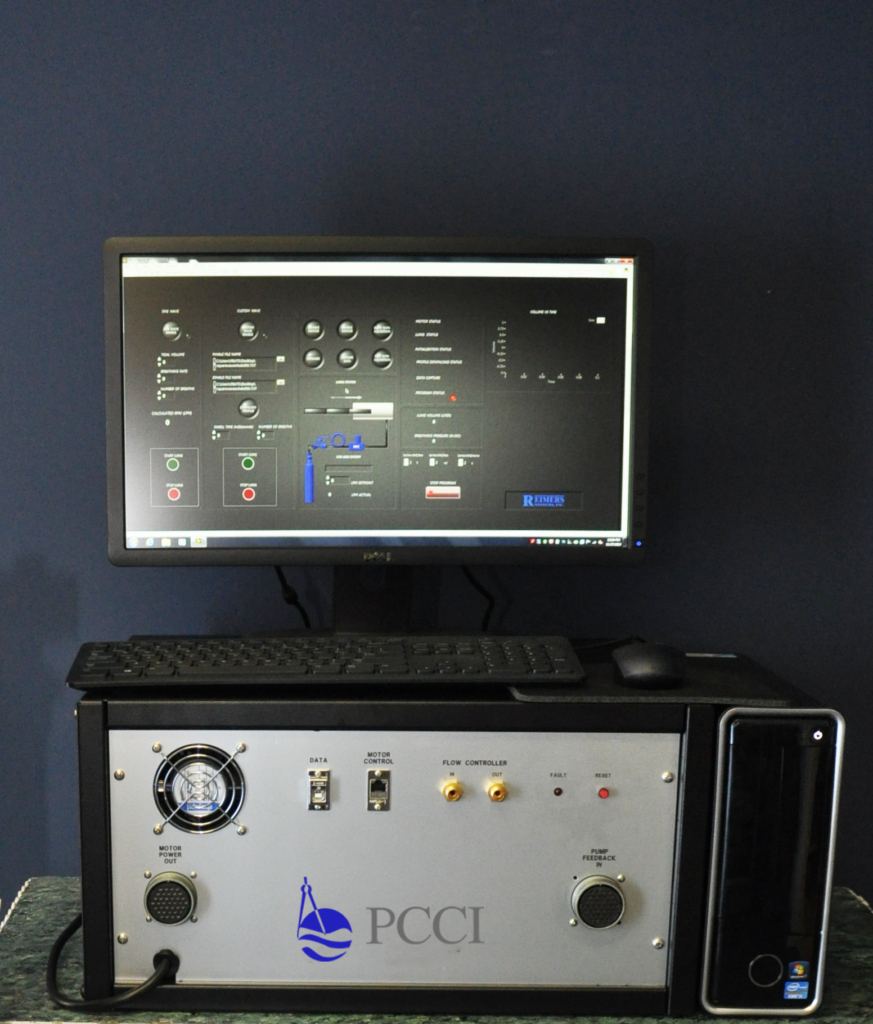
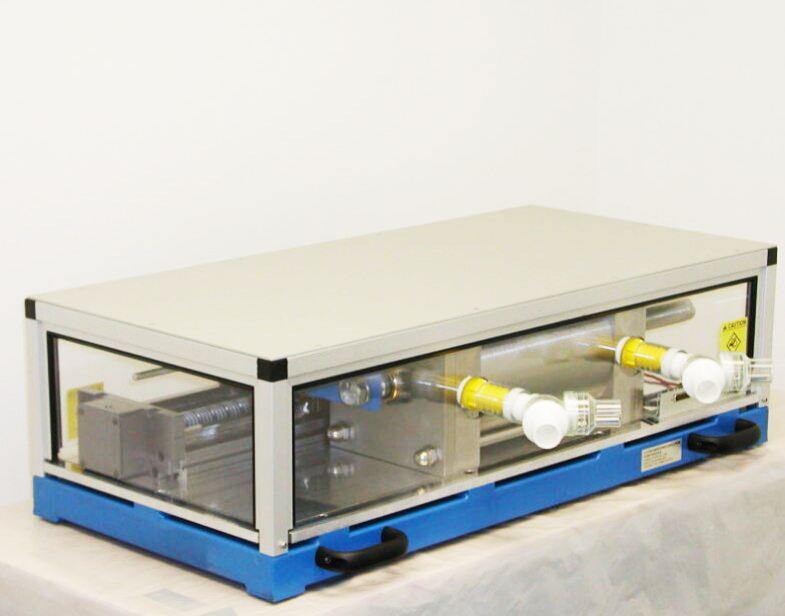
The Personal Breathing Apparatus Test Station (PBATS) from PCCI Hyperbaric Systems combines four decades of life support engineering with state-of-the-art technology to accurately test and document the performance of breathing apparatus used in diving, firefighting, mine rescue, aerospace, and more.
Compact, portable, and ready to work right out of the box, the PBATS features a simple, robust design that's versatile and upgradeable to grow with your testing needs. PCCI can build breathing simulators that simulate at atmospheric pressures or systems for simulating breathing at depth — underwater or underground.
Produces any physiologically reasonable waveform with exceptional accuracy. Sinusoidal waveforms are configured on the user interface by entering breathing rate and tidal volume; non-sinusoidal waveforms can be created using a provided Excel template. A ball screw / servo motor drive delivers smooth waveform generation — even at low RMVs — without stepper motor roughness. The unit can be placed inside a pressure vessel while the control module stays outside. The following three baseline models can be customized for your test protocol.
LM-90:
Controlled by a digital motion controller with user-specified 110 or 220 VAC. Connects to the control computer via a standard network interface — no special boards required. The familiar Windows-based software offers intuitive control plus a versatile servo program that can be modified using a simple control language for advanced applications.
Ready to work right out of the box. Bench-top footprint built for lab mobility without sacrificing capability.
Our models can deliver all of the standard breathing waveforms normally used in underwater breathing apparatus testing.
Our breathing simulators can simulate breathing from one atmosphere to 1000 psi ambient.
Ball screw / servo motor drive eliminates the roughness of stepper-motor systems — especially at low RMVs.
Lung module operates inside a pressure vessel while the control module stays outside, via optional wire feed-thru.
A simple, robust design that grows alongside your evolving testing requirements — built for long-term reliability.
Wire feed-thru kit
Computer data acquisition systems
Temperature & humidity control
CO₂ add system
Larger tidal volumes
High-pressure models
Tandem auxiliary cylinders
Custom configurations to spec
Every PBATS system is configured to your apparatus, protocol, and facility — let's talk specs.